Midterm 2026: Tensions and Rituals Mark the Fight for Congress
From library booths to food trucks, voters navigated a divided nation on Tuesday, with control of the House and Senate hanging in the balance.
By Luka Evans ·
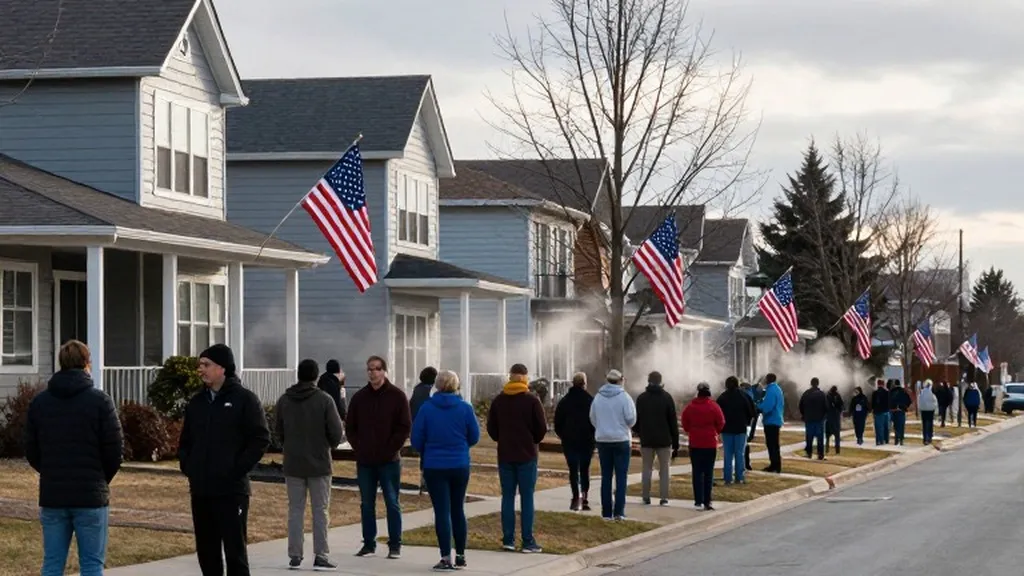
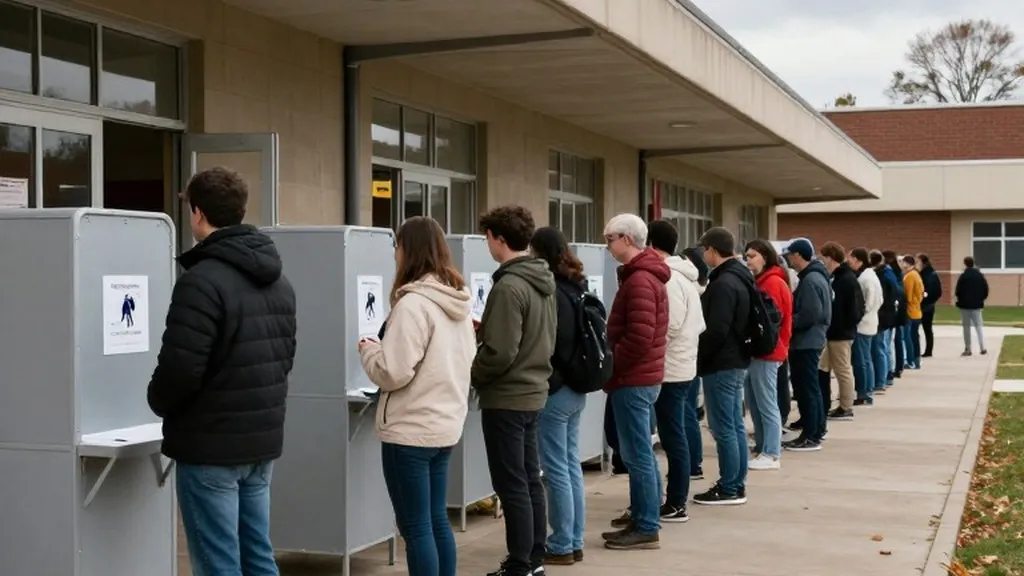
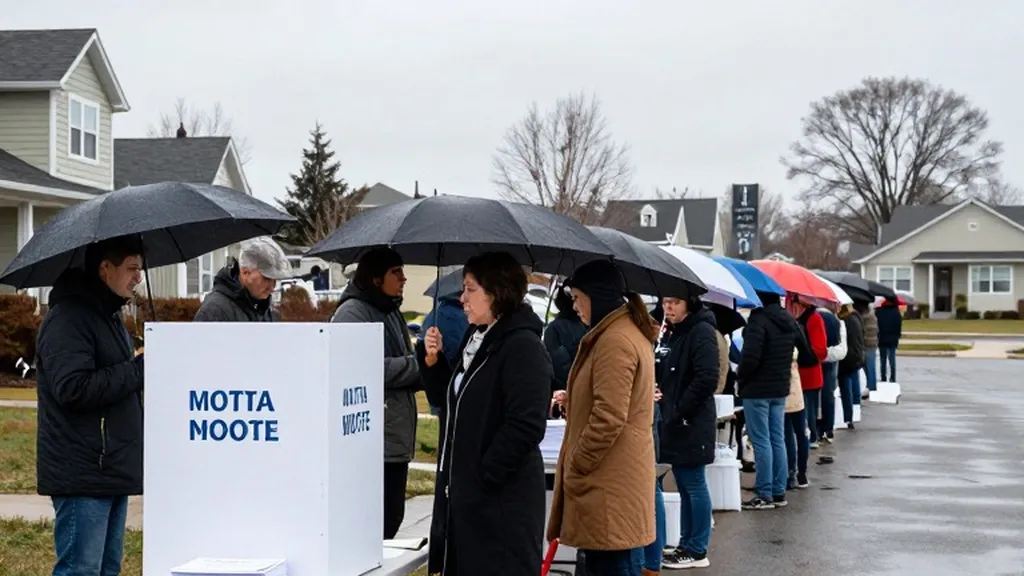
Voters across the United States cast their ballots on Tuesday in the 2026 midterm elections, a contest that will determine which party holds the keys to Congress for the rest of President Trump’s term. The day unfolded in polling places ranging from school gymnasiums to converted event spaces, capturing a snapshot of a country deeply split along political lines. As polls closed, the focus shifted to the counting of votes and the subsequent power shifts in Washington.
The physical settings of the vote varied by community, reflecting local resources and traditions. In Chicago, citizens filled out ballots at the McKinley Park Library, while in St. Louis, residents of the Shaw neighborhood voted at Wild Carrot, an event space set up for the occasion. In Austin, Texas, lines formed at University Presbyterian Church, and in Boston’s Allston neighborhood, a sign at the Lyon Upper School directed voters to their station. In Fairfax, Virginia, an election official taped signs to a wall inside the county government center to guide traffic to the polling room.
Personal moments punctuated the civic routine. In Herndon, Virginia, five-year-old Tyler Prehn placed his father’s ballot into the tabulating machine at Lutie Lewis Coates Elementary School, watched closely by his three-year-old brother Levi. In Des Moines, Iowa, Diane Mitchell distributed Dutch Deli sandwiches and cookies from a food truck, offering comfort alongside the duty of voting. These scenes stood in contrast to the more formal proceedings in cities like San Francisco, where ballots were dropped off outside City Hall, and Hartford, Connecticut, where a large sign hung from a balcony outside the municipal building.
For some, the election carried a weight beyond the standard partisan battle. In Minneapolis, Peg Ihinger photographed a sticker from her early voting after leaving it at a memorial for Alex Pretti. Ihinger expressed a desire for the recent turmoil to subside, stating, "I just want this nightmare to end for our city and our country." She noted that Pretti and Renée Good, both 37-year-old Minneapolis residents, died in separate incidents involving federal immigration and customs officers during Operation Metro Surge in January. Their deaths had marked the city’s political climate for months.
Signs of heightened security and tension were visible in other urban centers. In Washington, D.C.’s Columbia Heights neighborhood, markings on a sidewalk instructed National Guard personnel to stay 50 feet back. In Manchester, Connecticut, voters at Manchester High School received standard "I Voted" stickers, a familiar ritual even in a charged atmosphere. In Hastings, Minnesota, the process relied on electronic voting stations located inside City Hall.
As the day wound down, photographers from member stations documented the final reactions and the initial tallies. The results will reshape the legislative agenda for the remainder of the current presidential term, settling the balance of power in both chambers of Congress.
More Politics · National news · Report a business · Got a Story?