Alaskans await Nov. 18 deadline as ranked votes determine Senate and governor races
With no candidate leading by more than 50%, state officials target Nov. 18 for final tabulation of overseas ballots and ranked choices in two high-profile contests.
By Luca Harrison ·
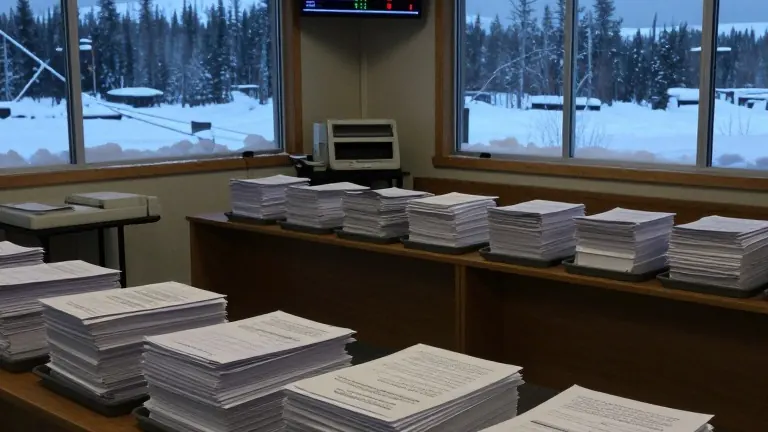
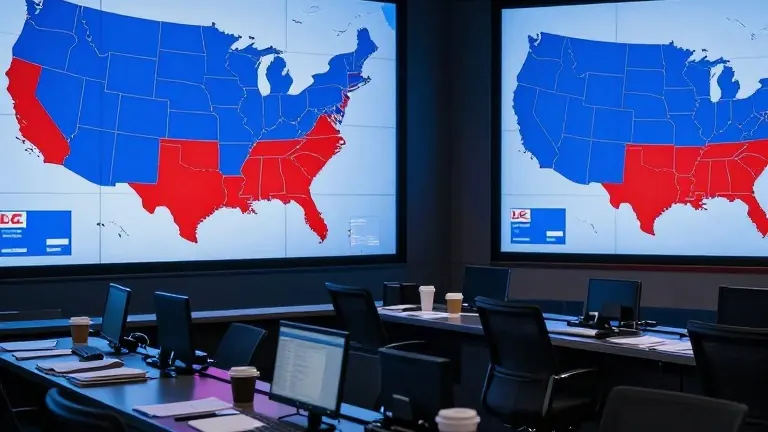
State elections officials set Nov. 18 as the target date to finish tabulating votes in Alaska’s open U.S. Senate and governor races. This deadline reflects the state’s rule that overseas ballots must arrive within 15 days of the election. No candidate in either race has yet secured more than 50% of first-choice votes, triggering the use of ranked-choice voting to determine the winners.
The Senate contest is between two-term Republican Sen. Dan Sullivan and Democratic former Rep. Mary Peltola. The governor’s race features former state Rep. Jonathan Kreiss-Tomkins, a Democrat seeking to become the first of his party to hold the office since Tony Knowles served from 1994 to 2002. Kreiss-Tomkins faces three Republicans, including business owner Bernadette Wilson, who received an endorsement from President Donald Trump.
The Senate race has been marked by legal disputes and allegations of partisan interference. The U.S. Department of Justice sued under President Trump’s direction to block the certification of the race if Sullivan lost. The suit cited potential voter confusion caused by a second candidate named Dan J. Sullivan, a retired teacher on the ballot. A federal judge dismissed the case, but the department has appealed.
Tensions rose when The New York Times reported that Peltola’s top aides appeared involved in recruiting Dan J. Sullivan. The report relied on interviews with a former campaign manager who was fired before the August primary. It also cited text messages and finance documents showing an operative was paid by a group backing Peltola. Federal authorities have confirmed a criminal investigation is underway. Peltola denies any involvement, while Dan J. Sullivan has not responded to recent inquiries.
Sullivan’s closing argument to voters questioned Peltola’s denials. His campaign expressed confidence in his chances on Wednesday, citing what it described as the biggest election cheating scandal in Alaska’s history. The campaign also noted a broader struggle for Republicans nationwide.
Both campaigns have urged voters to wait for the full count. Peltola told supporters Tuesday night that the process would take time due to the state’s geography. She noted that rural communities often rely on air or water for mail delivery. “It’s going to take a long time to make sure we’re counting every vote from every far-flung hinterland community, from every tiny outpost, from all of our service members serving overseas, our young people going to colleges,” Peltola said.
In the governor’s race, Kreiss-Tomkins told supporters on election night, “What a night this is for the future of our state.” He positioned himself as a consensus builder succeeding term-limited Republican Gov. Mike Dunleavy. State Republican leaders urged their voters to rank the three GOP candidates to maximize their chances. Wilson described herself as “cautiously optimistic for the days ahead” in a Wednesday statement.
A separate ballot measure asks Alaskans to repeal the open primary and ranked vote system for the second time in two years. Voters approved the system in 2020, which took effect in 2022. They narrowly rejected a repeal effort in 2024. The current measure is also too close to call at this time.