Young and working-class voters drove Democratic gains in 2026 midterms
A major national survey shows that voters under 30 and those with incomes under $50,000 shifted sharply left, helping Democrats win key Senate seats and governorships.
By Luca Harrison ·

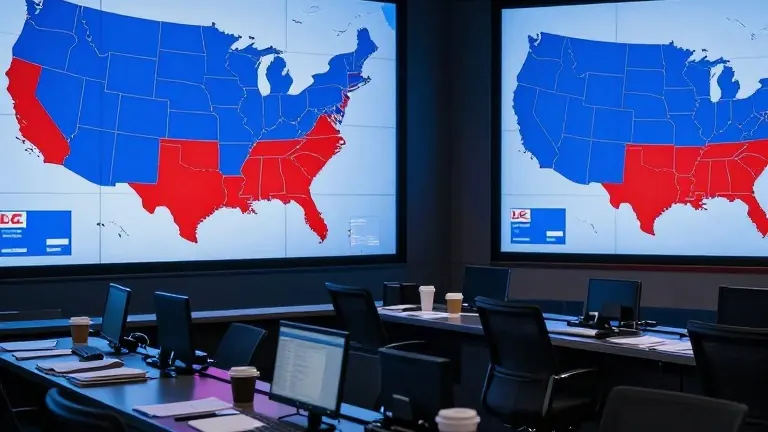
The 2026 midterm elections marked a distinct reversal in voting patterns for several major demographic groups that had moved toward the Republican Party in 2024. The AP Voter Poll, which surveyed more than 100,000 registered voters across all 50 states, indicates that Democrats regained substantial ground among young people, Hispanic voters, Black men, moderates, and low-income households. This shift helped Democratic candidates secure victories in competitive Senate races and governorships in states such as Texas, Georgia, and Kansas.
Voters under 30 displayed the most dramatic change in allegiance. In the 2024 presidential election, this group was roughly evenly split between Donald Trump and Kamala Harris. In the 2026 House races, approximately 70% of voters under 30 supported the Democratic candidate, while only about 30% voted for Republicans. Despite this strong preference, voters under 30 comprised only about 10% of the national electorate, which limited their overall impact on total vote counts. Nevertheless, this group expressed high levels of dissatisfaction with the current political leadership. About 50% of young voters described themselves as angry about the direction of the country, a higher rate than the roughly one-third of voters aged 65 and older who felt the same way.
Hispanic voters also reversed their 2024 trend. In the previous election, roughly 40% of Hispanic voters supported Trump. In 2026, only about one-third of Hispanic voters backed the Republican candidate in their local House race, while 60% voted for Democrats. This shift was instrumental in the Texas Senate race, where Democrat James Talarico defeated Republican Ken Paxton. Talarico received support from roughly 60% of Hispanic voters in that state. Even in Florida, where Republican Ashley Moody won a narrow Senate reelection, less than half of Hispanic voters supported her, marking a departure from the group’s definitive support for Trump in 2024.
Black voters, particularly Black men, also moved closer to the Democratic Party. In 2024, about one-quarter of Black men voted for Trump. In the 2026 midterms, only about 10% of Black men supported the Republican House candidate. Nationally, about 90% of Black voters chose the Democratic candidate for House, up from the roughly 80% who voted for Harris in 2024. This trend was visible in the Georgia governor’s race, where Keisha Lance Bottoms won 90% of Black men’s votes. In Florida, however, Republican Byron Donalds won about 25% of Black men’s votes, though he struggled to gain support among Black women, who backed him by only about 10%.
Moderate voters played a decisive role in flipping several Senate seats from Republicans to Democrats. About two-thirds of moderates supported the Democratic House candidate in 2026, an increase from the 60% who backed Harris in 2024. A majority of these voters cited a lack of checks and balances on the presidency as a reason for their vote. In Kansas, Democrat Adam Hamilton won about 70% of moderate voters, a large jump from the 50% Harris received in the state two years earlier. In Iowa, Democrat Josh Turek won two-thirds of moderates, and in North Carolina, Democrat Roy Cooper won about three-quarters of that group. These margins contributed to Democratic victories in those key Senate races.
Economic concerns drove the shift among lower-income voters. More than half of voters with a 2025 household income under $50,000 voted for the Democratic House candidate. In 2024, this group was evenly divided between Trump and Harris. About 30% of U.S. voters nationally reported a family income below $50,000. These voters were more likely than their higher-income counterparts to cite the cost of food, gas, and utilities as primary concerns. About 60% of voters in the under $50,000 income bracket said the cost of living was a deciding factor in their vote, compared to about 50% of those earning $50,000 or more. The survey was conducted between October 19 and November 3 in most states, with a margin of sampling error of plus or minus 0.6 percentage points.