Ukraine Adapts as Starlink Service Fluctuates
Rising political tensions and recent outages force Kyiv and its European allies to reconsider their heavy reliance on satellite internet for wartime communications.
By Khalid Rahman ·
Ukraine is no longer treating Starlink as an invulnerable backbone for its war effort. The service, which has been central to the country's resistance against Russia's full-scale invasion for years, is showing signs of strain. This shift is driven by the service's growing unreliability and the increasing political weight of its owner, Elon Musk. As a result, urgent questions are now dominating the strategic discussions in Kyiv and across Europe regarding how to proceed without this critical infrastructure.
The stakes are high because Starlink is the world's largest communications satellite network. It provides high-speed internet and data streams to any user or vehicle equipped with a compact terminal. For Ukraine, this capability has been vital. It keeps civilian communications open and supports military operations. Specifically, it allows the Ukrainian military to remotely control and guide drones. These drones are used for air defense against Russian attacks and for striking back at Russian targets.
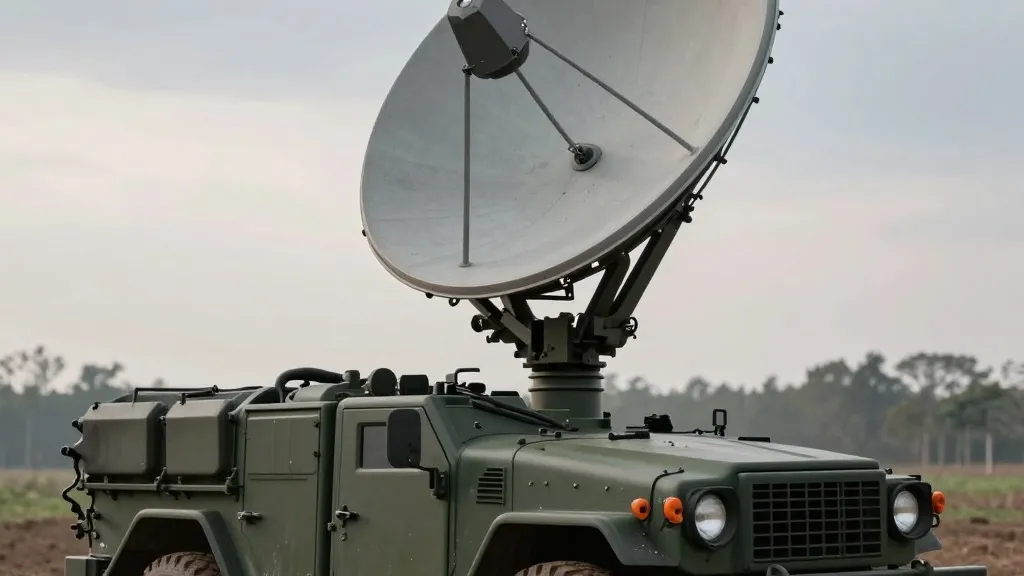
Despite its dominance, the system is not without flaws. The head of hardware research and development at the Ukrainian defense company BlueBird Tech noted that Starlink currently offers some of the best satellite coverage available. When considering cost, availability, and ease of use, it has virtually no competitors. However, the representative, who spoke anonymously for security reasons, pointed out a key practical limitation. Users must position the antenna correctly to receive signals from the satellites. This physical requirement remains a constant operational hurdle.
The path to this current state has been shaped by years of dependence and recent political shifts. Initially, the service was adopted because it filled a critical gap in connectivity. Over time, it became the default choice for both government and military use. The reliability was generally high, allowing Ukraine to integrate the technology deeply into its defensive and offensive strategies. The integration was so thorough that losing the service would mean losing a significant portion of their drone capabilities.
The situation changed as the political inclinations of the service's leadership became more apparent. These political moves began to influence how the service was managed and perceived by its users. The latest surprise disruptions to service in Ukraine highlighted these concerns. These outages were not just technical glitches; they signaled a potential vulnerability in a system that was previously seen as stable. This prompted a reassessment of risk among Ukrainian officials and their European partners.
The financial burden of maintaining this connection has been shared. The US government and European countries, including Poland and Germany, have paid SpaceX for tens of thousands of commercial Starlink terminals. These devices were sent to Ukraine to ensure widespread coverage. The same governments have also covered the subscription fees required to keep the service active. This financial support underscores the strategic importance placed on maintaining the satellite link.
Beyond the commercial terminals, there is a deeper layer of integration. The US government has granted Ukraine’s military access to a military-grade version of the service known as Starshield. This version offers enhanced security and capabilities tailored for defense operations. Ukrainian defense companies are also using Starshield to test their own technologies. According to the BlueBird Tech representative, these companies cooperate with the military to ensure their innovations work effectively with the satellite infrastructure.
Now, the focus is shifting toward contingency planning. While Starlink remains the best available option, its political volatility is a concern. Ukraine and Europe are looking at ways to reduce their dependency on a single provider. This involves exploring alternative satellite networks and improving local communication infrastructure. The goal is to ensure that a disruption in one system does not cripple the entire command and control structure.
The next steps involve a combination of short-term fixes and long-term investments. In the immediate term, Ukraine will continue to use Starlink and Starshield while working around the recent outages. In the longer term, both Ukraine and its European allies are likely to increase funding for alternative satellite services. They may also invest in more robust ground-based networks to provide redundancy. The aim is to create a multi-layered communication system that can withstand both technical failures and political shifts.
This transition will not happen overnight. The sheer scale of Starlink's deployment makes it difficult to replace quickly. However, the recent disruptions have made it clear that reliance on a single commercial entity is risky in a prolonged conflict. As the war continues, the ability to communicate will remain a decisive factor. Ukraine is now preparing for a future where Starlink is one tool in a larger kit, rather than the sole solution.
Source: Ars Technica