Tesla Delays Humanoid Robot Deliveries to Late 2027 Amid Persistent Hardware Challenges
Tesla has pushed the start of external Optimus deliveries to the end of next year, citing unresolved issues with the robots' hands, durability, and artificial intelligence, while competitors advance their own production timelines.
By Amy Swan ·
The timeline for Tesla’s entry into the commercial humanoid robot market has slipped again, with the company now targeting the end of 2027 for external deliveries. During the Q3 2026 earnings call, CEO Elon Musk acknowledged that significant technical hurdles remain, specifically regarding the robots' hands, overall durability, and the underlying artificial intelligence. This delay marks a further adjustment from previous projections, which had suggested high-volume production for third parties could begin as early as 2026.
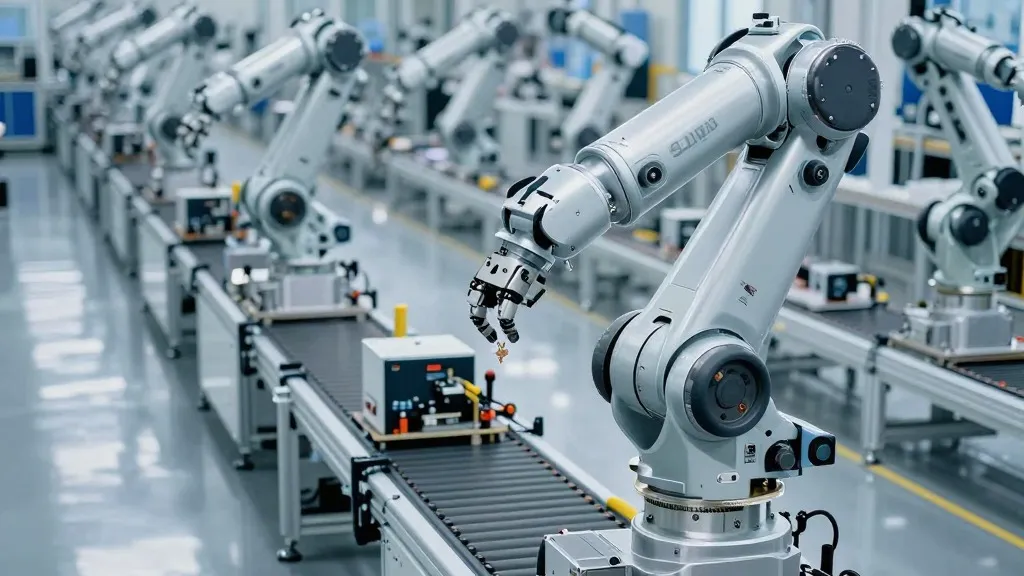
Tesla has initiated early production of the Optimus robot on its high-volume manufacturing line in Fremont, California, the same facility previously dedicated to the Model S and Model X. While the majority of the assembly line is installed, Musk indicated that reaching the target capacity of approximately 20,000 units per week will take at least another year, potentially longer. The protracted timeline is attributed to ongoing design changes in critical components. The company intends to focus initial external sales on industrial applications that involve dangerous, repetitive, or round-the-clock tasks.
The primary technical obstacle identified by Tesla engineers is the design of the robot's hand. A Tesla Optimus engineer noted during the call that the hand is one of the most difficult hardware areas to finalize, alongside custom gears that continue to present reliability concerns. Musk agreed, explaining that the fingers must be soft enough to manipulate delicate objects while enduring constant wear, a challenge compounded by the fact that robotic hands cannot heal like human skin. These mechanical complexities are central to the company's current development bottlenecks.
Beyond hardware, Tesla is still refining the AI architecture that drives the Optimus. Unlike its vehicle fleet, which generates data for its Full Self-Driving system, Tesla lacks a large fleet of robots collecting operational data. To address this, the company plans to build between 10,000 and 20,000 units to practice tasks in a dedicated facility called the Optimus Academy. Additionally, Tesla intends to integrate its AI5 chip into the robots around April 2027. Musk promised a video demonstration within the next one to two months, aiming to show the robot performing unscripted tasks to counter criticisms that current demos are merely pre-programmed routines.
This delay aligns with broader challenges facing the humanoid robotics sector. Reports from earlier this year indicated that while Tesla had ramped production to hundreds of units per week, the robots struggled to generalize to new tasks. The hand and forearm components contained over 100 small parts that required manual assembly, and touch sensors exhibited reliability issues. Tesla’s own shareholder letter for the third quarter described the current output as the first "production-quality" bots, implying that earlier units were not ready for commercial use. The timeline has shifted repeatedly, with 2024 targets for internal use and 2026 targets for external sales both falling short.
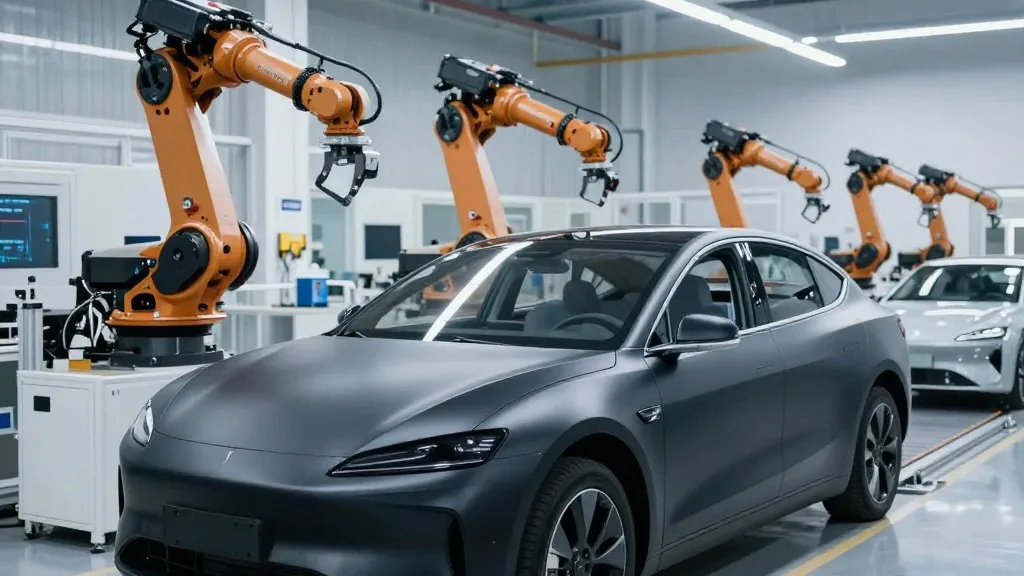
Competitors are advancing on similar fronts, challenging Musk’s claim that no other company is close to Tesla in developing a general-purpose humanoid. XPeng, a Chinese automaker, activated an automated production line for its IRON robot in Guangzhou in September, with more than 80% of core processes automated. XPeng plans to begin mass production by the end of 2026 and deliver units to stores and malls in the first half of 2027, a timeline comparable to Tesla’s. While XPeng has not yet shipped units to paying customers, its production automation suggests a different approach to scaling.
Meanwhile, Boston Dynamics, a subsidiary of Hyundai, has begun producing its electric Atlas robot and reported that all of its 2026 deployments are committed, including to Google DeepMind. In September, the company opened a robot training center at Hyundai’s Metaplant in Georgia, where Atlas is learning to sequence car parts for assembly lines. Hyundai plans to deploy 25,000 robots across its plants in the coming years. Notably, Boston Dynamics hired Milan Kovac, Tesla’s former head of Optimus, in January. The company has also adopted a pragmatic approach to the hand problem by prioritizing sturdy grippers for industrial parts over human-like dexterity, effectively working around the specific issue Tesla cites as a major blocker.
The competitive landscape suggests that while Tesla may have built the most robots, the industry-wide struggle to achieve AI generalization and mechanical reliability remains unresolved. Tesla’s competitors are not claiming a lack of competition, and their production milestones indicate steady progress. As electricity rates climb and the demand for automation grows, the ability to deliver reliable, useful robots will be the defining factor for market leadership. Tesla’s upcoming video demonstration will be a key test of whether the late-2027 target is realistic or if further delays are on the horizon.
Source: Electrek