Israel and Kazakhstan sign tax deal after 10 years
The agreement was finalized in Jerusalem alongside new pacts on AI and water, as Deputy PM Madiyev led a 50-person delegation.
By Luka Evans ·
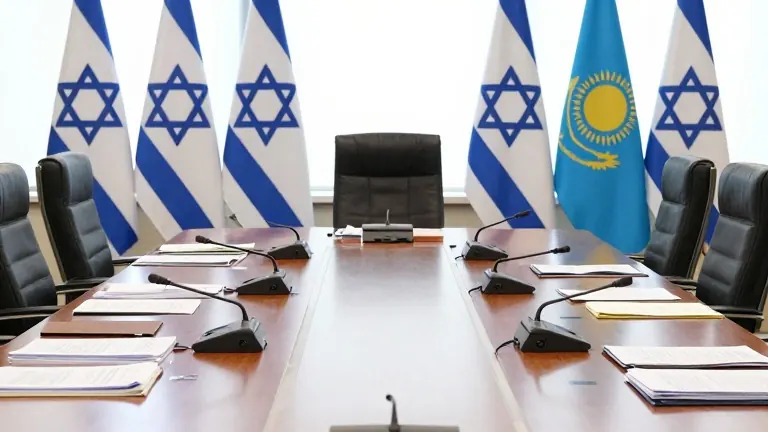
Israel and Kazakhstan signed a double taxation agreement on Monday, ending a negotiation process that began more than a decade ago. The accord was reached during the tenth meeting of the two nations' Joint Economic Commission, held in Jerusalem. Ze'ev Elkin of the Israeli Finance Ministry and Zhaslan Madiyev, Kazakhstan's Deputy Prime Minister, co-chaired the session.
The signing marks the latest development in a series of diplomatic and economic engagements between the two countries. Madiyev is the highest-ranking Kazakh official to visit Israel in ten years. He arrived with a delegation of more than 50 senior government officials, including deputy ministers and regional governors. His visit follows a trip by President Isaac Herzog to Kazakhstan in April 2026 and a visit by Foreign Minister Gideon Sa'ar to Astana in January of the same year.
Beyond the tax treaty, the two governments signed memoranda of understanding on artificial intelligence, labor, and cybersecurity. They also issued a joint declaration on space cooperation. The commission's discussions covered energy, water technologies, agriculture, and critical minerals. A new joint working group on water management was established, with the Israel Water Authority leading the Israeli side. This group was created following decisions made during Sa'ar's January trip.
Elkin described the tax agreement as a major step that will reduce the burden on companies and investors. He noted that relations had gained momentum over the past year. "We are working to advance cooperation in artificial intelligence and innovation, water, agriculture, and energy," Elkin said. He added that the tax deal would open new economic opportunities by clarifying taxation rights across borders.
The economic ties are reinforced by Kazakhstan's accession to the Abraham Accords in November 2025. This membership expanded the US-brokered framework into Central Asia. Kazakhstan, the largest economy in the region, has a gross domestic product of approximately $301 billion. The country is the world's leading uranium producer, accounting for roughly 40% of global output in 2024. It also holds significant resources of copper, zinc, tungsten, and lithium.
Madiyev, who oversees Kazakhstan's national AI program, emphasized the need for practical results. "It is important for us that cooperation is not limited to exchanging experience and signing documents," he said. "It should result in concrete projects, new expertise, investments and technologies that are implemented and put to work in Kazakhstan." A bilateral business forum organized during the visit resulted in the signing of seven commercial documents.