Recursive Launches Flint, a 40-Billion Parameter Model Built by AI
A new open-weight coding model from Recursive demonstrates how automated systems can streamline the development of high-performance artificial intelligence.
By Takeshi Davidson ·
Recursive has released Flint, an open-weight AI model designed for coding tasks. This launch marks a significant step toward recursive self-improvement, a process where artificial intelligence helps build and refine other AI systems. The company argues that this method allows smaller teams to create competitive models without the massive resources usually required by major tech firms.
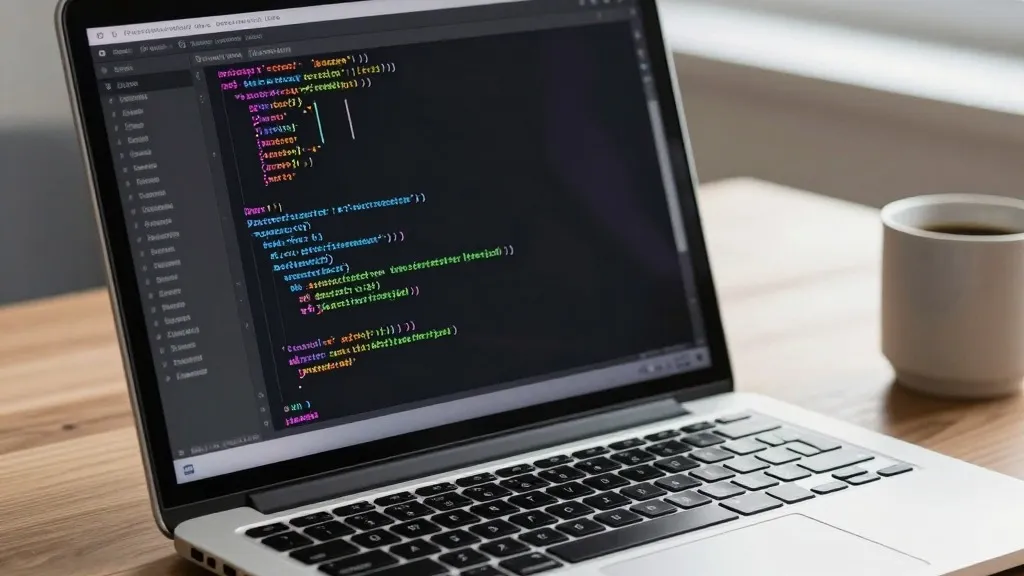
Flint contains 40 billion parameters, a size that allows it to run on consumer hardware like a Mac with 48 GB of RAM. In testing, the model proved fast and accurate for various programming requests. Users successfully created command line tools, web scraping scripts, and informational websites using the system. These results suggest that Flint outperforms other models of similar size and architecture in coding benchmarks.
Richard Socher, the CEO and cofounder of Recursive, explains that most of the model pipeline was handled by AI. The company utilized a system called the Eureka Machine to automate key development stages. This automation led to innovations in base model training, new architectural designs, and code optimization for specific silicon chips. Socher notes that this approach enabled a small research team to build a world-class model in just a few months.
The concept of recursive self-improvement has generated debate within the AI community. Some experts worry that if AI can continuously improve itself, it may eventually escape human control. Concerns peaked earlier this year when a researcher from Anthropic warned that such advances could lead to human extinction. In response, several bills in Congress have proposed banning the technique. Recursive views these fears as overly dramatic and believes that current legislation might unnecessarily slow progress.
Socher states that Flint was built using a system that remains under human oversight. The goal is for the Eureka Machine to achieve full recursive capabilities, but humans will retain the ability to stop the process if needed. He hopes this demonstrates that the necessary steps are in place to build such a controlled system. The company has raised $650 million at a $4.65 billion valuation from investors including Google Ventures, Greycroft, Nvidia, and AMD Ventures.
The team behind Recursive includes Socher, formerly the chief scientist at Salesforce, and Jeff Clune, a professor at the University of British Columbia. Clune researches AI systems capable of indefinite learning. While other institutions like Microsoft and Carnegie Mellon University have published work on similar recursive improvements, Recursive’s release offers a practical example of the technology. Socher believes this approach will make cutting-edge AI more accessible and benefit a wider range of users.
For now, the risks of full recursive self-improvement appear manageable. The technique seems like a promising way to enhance AI models efficiently. As the field evolves, the balance between automation and human oversight will likely remain a central topic of discussion among developers and policymakers.