White House Orders AI Giants to Pay Local Power Dividends
New federal requirements demand that data center operators return excess energy to nearby communities to offset rising utility bills and ease local opposition.
By Lucia Herrera ·
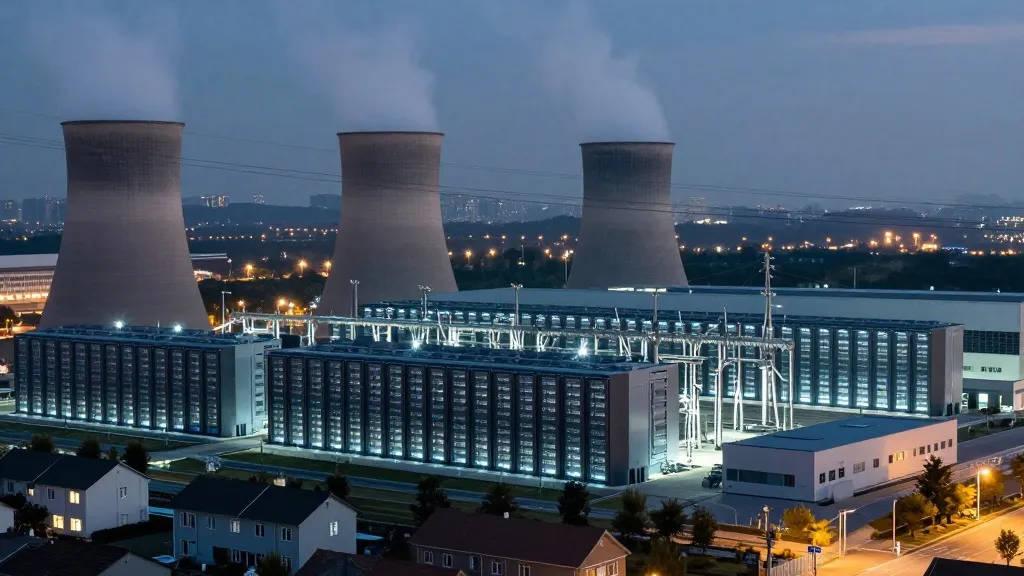
The White House has issued a new directive requiring artificial intelligence data center operators to provide financial or energy dividends to the communities hosting their facilities. This move, announced via a Truth Social post by President Donald Trump, aims to mitigate local opposition by ensuring that residents receive tangible benefits, such as reduced electricity costs, in exchange for hosting these massive infrastructure projects. The administration is framing this as a necessary step to make data centers more palatable to the public while maintaining the United States' competitive edge in the global AI race against China.
The core of the new mandate is twofold. First, data center builders are required to generate their own electricity, a rule the administration has previously emphasized. Second, and more novelly, operators must give or sell any excess energy back to the local grid. This strategy is designed to prevent energy costs from rising for nearby residents and, in some cases, to actively lower them. By tying the economic burden of these facilities directly to the communities that host them, the government hopes to transform a point of contention into a source of local benefit.
This development follows a wave of protests across the United States, where residents have pushed back against the outsized impact of AI infrastructure. Small communities have cited a range of grievances, including skyrocketing utility bills, noise pollution, air quality issues, deforestation, and water shortages. The new dividend model is the administration's direct response to these complaints, specifically targeting the pain point of rising energy costs that have made data centers a difficult sell in many regions.
The timeline leading to this mandate reveals a shift in federal strategy. Previously, the focus was on ensuring data centers were self-sufficient in power generation to avoid straining the public grid. A recently passed act already requires these facilities to shoulder the costs of necessary grid upgrades, preventing those expenses from falling on local taxpayers. The latest directive builds on this foundation by adding a revenue-sharing component, creating a more comprehensive framework for local-community relations.
President Trump emphasized the potential for these financial arrangements to change local sentiment. In his post, he noted that data centers which were once highly unpopular in specific areas became extremely popular once a financial deal was struck. He urged stakeholders to "MAKE DEALS, and get them built!!!", signaling a strong desire to accelerate construction by aligning the interests of corporate developers with those of local residents.
However, the practical implementation of these dividends remains a subject of scrutiny. Critics point out that the term "dividend" is unusual for this context, as companies typically only pay such distributions when they are profitable. New data center builds are often capital-intensive and may not generate immediate profits, raising questions about how these payments will be funded in the short term. Furthermore, the type of power generation currently being installed in these facilities is primarily gas-powered, which some argue is not necessarily an improvement for local air quality and noise levels compared to conventional power plants.
There are also broader ecological concerns that the financial dividend does not address. Issues such as enormous water consumption, ecological damage, and general pollution remain significant hurdles for AI data centers. While the energy cost relief may win over some neighbors, it does not resolve the other major challenges that make these facilities a hard sell in many locations. The success of this mandate will depend on whether the economic benefits outweigh the other environmental and logistical burdens.
Looking ahead, the administration is keen to stay ahead in the AI arms race and is using these incentives to win back favor with skeptical communities. The next steps will involve determining how these dividends are structured and enforced. Will they be direct cash payments, credits on utility bills, or a formalized energy resale agreement? The details are yet to be seen, but the expectation is that these financial deals will become a standard part of the permitting process for new AI infrastructure projects.
For now, the directive sets a new tone for the relationship between big tech and the towns they occupy. By mandating that excess energy be returned to the community, the government is attempting to create a model where the presence of a data center is viewed not just as a burden, but as an economic asset for the local area. Whether this shift in perspective will be enough to quiet the protests remains to be seen, but the pressure on developers to offer these deals is now coming from the top.
Source: Tom's Hardware