New Federal Rule Aims to Standardize Cyan Lights for Driverless Cars
Regulators propose a uniform blue-green signal to help road users identify autonomous vehicles, while simultaneously removing outdated lighting requirements that no longer apply to cars without human drivers.
By Juan Gonzalez ·
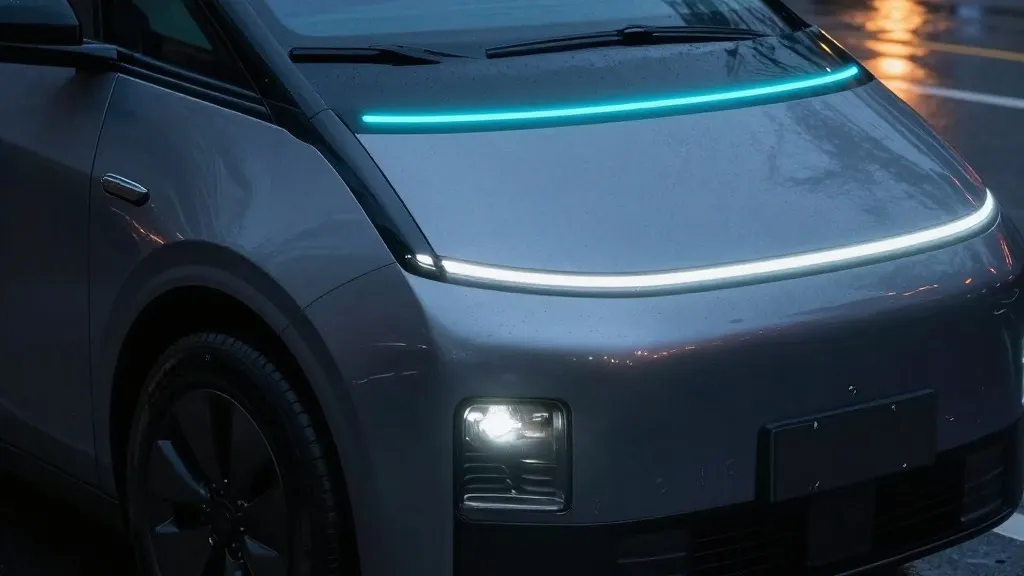
The era of guesswork regarding how to identify a driverless car on the road may be coming to an end with a new color choice.
Federal regulators have released a proposal that would require or encourage autonomous vehicles to use cyan-colored marker lamps to indicate that an automated system is in control. The National Highway Traffic Safety Administration (NHTSA) published these changes as part of an update to Federal Motor Vehicle Safety Standard No. 108. This rule specifically rewrites existing guidelines to accommodate vehicles that do not have a human behind the wheel. The primary goal is to create a clear visual signal for law enforcement and other road users.
The selection of cyan, a distinct blue-green hue, is not arbitrary. The automotive industry currently relies on red, amber, and white lights for standard functions like brake lights, turn signals, and headlights. Emergency vehicles already use flashing blue and red lights. By introducing a new color that is distinct from these existing categories, NHTSA aims to fill a visual gap. This approach prevents confusion among drivers who need to quickly assess whether a vehicle is being operated by a human or a computer. The agency argues that a consistent color standard is essential for safety in mixed traffic environments.
There is some historical context for this type of lighting. Mercedes-Benz previously received state-level approval to use turquoise lights on its Level 3 Drive Pilot vehicles. However, the automaker has since moved away from that specific plan in favor of a Level 2++ system. Despite this shift, NHTSA sees value in establishing a national standard. This would allow major robotaxi operators such as Waymo, Nuro, and Zoox, along with automakers like General Motors and Mercedes-Benz, to adopt a uniform signaling method. A single standard helps ensure that any driver on the road can recognize the status of an autonomous vehicle regardless of the manufacturer.
Under the proposed rule, the installation of cyan marker lights would remain optional for manufacturers. However, if an automaker chooses to install them, the federal standards would dictate the specific color, brightness, and location on the vehicle. This regulation is designed to prevent a fragmented market where different companies use varying colors or intensities. By setting official parameters, NHTSA ensures that any vehicle using these lights does so in a consistent and legally compliant manner. This clarity is crucial for public understanding and trust in driverless technology.
Beyond adding new lights, the proposal also simplifies existing rules. Current regulations require physical controls such as hazard switches, manual beam shifters, and turn levers inside the vehicle cabin. These components are often unnecessary for fully autonomous cars that do not have a driver. NHTSA proposes removing these requirements to streamline the design process. The agency is also updating the 12.8-volt testing standard to accommodate modern LED lighting architectures. This change reduces administrative burdens for automakers who are building vehicles with advanced electronic systems.
This update is part of a broader effort by the Department of Transportation to facilitate the deployment of autonomous vehicles. The government aims to make it easier for manufacturers to build cars that lack traditional human-centric controls, such as steering wheels and pedals. By aligning federal standards with the realities of driverless design, the agency hopes to accelerate the integration of these vehicles into daily traffic. The proposal also considers eliminating rules that dictate the relative position of high-beam and low-beam lights, further streamlining the design process for modern lighting systems.
While the proposal seeks to ease regulations, enforcement of current rules remains active. Last month, NHTSA opened an audit query into the Tesla Cybercab. The investigation examines the technical data and processes Tesla used when certifying the vehicle. The focus is on the absence of specific design features, including sideview mirrors, pedals, and a steering wheel, which are typically required under current safety standards. This action highlights the ongoing tension between innovators seeking to remove traditional controls and regulators ensuring safety through established requirements.
The next steps in this process will involve public review and potential adjustments to the proposal. If finalized, the new standard will provide a clear framework for how autonomous vehicles communicate with the world. For readers in the Great Lakes and Ohio Valley, this could mean seeing a new, consistent blue-green glow on robotaxis as they become more common in urban areas. The shift toward standardized lighting marks a significant step in making driverless technology more recognizable and manageable for all road users.
Source: The Verge