Loudoun County: Amazon Halts Virginia Data Center Project
Following intense local opposition, Amazon is converting a 122-acre site in Northern Virginia into residential and mixed-use developments instead of four new AI facilities.
By Luis Fernandez ·
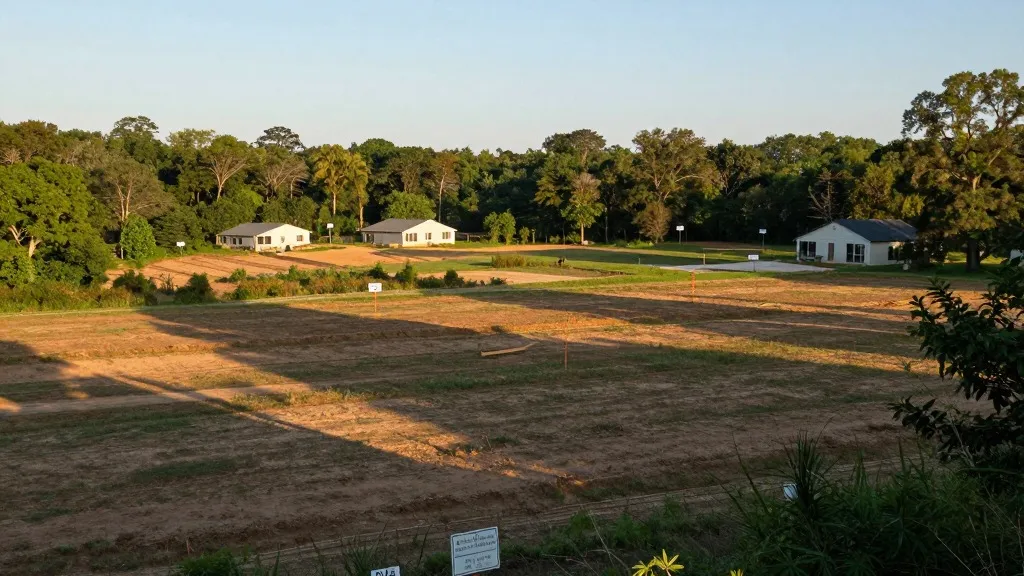
Residents of Loudoun County, Virginia, will no longer face the prospect of four new data center buildings rising on a former university campus near Washington, D.C. Instead, the majority of the 122-acre parcel will be redeveloped for mixed-use and residential projects, marking a significant shift in the region's land use plans.
The change follows Amazon’s decision to scrap its proposal to construct the facilities, which was originally submitted in July of this year. In place of the server farms, the company will donate 25 acres of the property to Loudoun County for the construction of a community arts center and a new recreational facility. Additionally, Amazon has committed to contributing $5 million to the county’s housing fund to support affordable housing initiatives.
This reversal highlights the growing tension between tech infrastructure expansion and local community interests. Loudoun County has long been known as “Data Center Alley” due to its high concentration of such facilities. However, recent backlash over noise pollution and the substantial power requirements of these centers has prompted local officials to rethink their approach to new buildouts. The county’s Board of Supervisors met with Amazon representatives in September, suggesting that an alternative use for the land might be more beneficial than proceeding with the original plan.
Josh Weissman, Amazon’s vice president for data center development, stated that the company had initially viewed the former George Washington University campus as a prime opportunity. However, he acknowledged the county’s specific concerns regarding development at that particular location. Weissman noted that while Amazon’s legal interpretation of the property’s development potential differed from the county’s, the company determined that a shared vision was preferable to costly litigation.
The decision occurs amid a broader surge in demand for data center capacity driven by the rapid adoption of artificial intelligence. While these facilities are essential for cloud services and storage, their expansion has raised alarms among local communities about energy costs and environmental impact. In response to these concerns, President Donald Trump recently called for data center operators and AI hyperscalers to pay local communities a dividend to offset energy price increases. He also proposed that these facilities be required to generate their own electricity and return excess power to the local grid.
Local officials have framed the outcome as a success of negotiation over conflict. Phyllis J. Randall, chair of the Loudoun County Board of Supervisors, said the agreement provides new spaces for residents to gather and play, while also creating more attainable homes for working families. The deal underscores a potential new model for balancing technological growth with local quality of life in the Great Lakes and Ohio Valley regions and beyond, where similar infrastructure debates are increasingly common.
Despite the official optimism, questions remain about the long-term energy capacity of the region. Critics argue that the power grid in Northern Virginia is already strained, making it difficult to support additional high-energy facilities. Whether this shift to residential development will alleviate pressure on local resources or simply delay the inevitable need for new power infrastructure remains an open question for the area’s future planning.
Source: Tom's Hardware