Hebron residents face seventh day of Israeli military lockdown
Over 3,000 people have been displaced and at least 110 detained as Israeli forces continue raids in the West Bank city ahead of Israel's general election.
By Takeshi Davidson ·
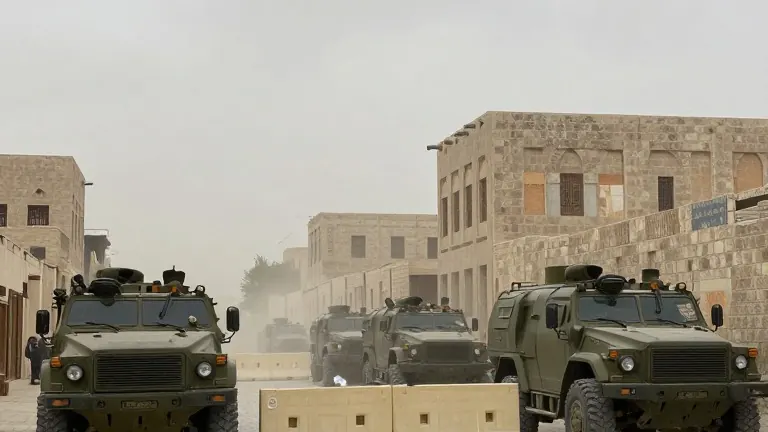
Residents of Hebron in the occupied West Bank have entered their seventh consecutive day under a strict Israeli military lockdown. The siege, which began last Friday, has closed all entrances and exits to the city, restricting movement and access to essential services. More than 3,000 people have been forced to leave their homes as military units occupy several Palestinian residences, converting them into barracks and posts.
The operation began after two Israeli soldiers were killed by Palestinian gunmen at a checkpoint near the settlement of Telem. Israeli forces later killed the gunmen inside Hebron. Prime Minister Benjamin Netanyahu announced the closure on social media, stating he ordered security forces to close Hebron immediately and prepare for a full lockdown across the West Bank. He described the goal as acting to destroy the area and change it completely. Finance Minister Bezalel Smotrich called for a comprehensive military campaign in the West Bank similar to the war in Gaza.
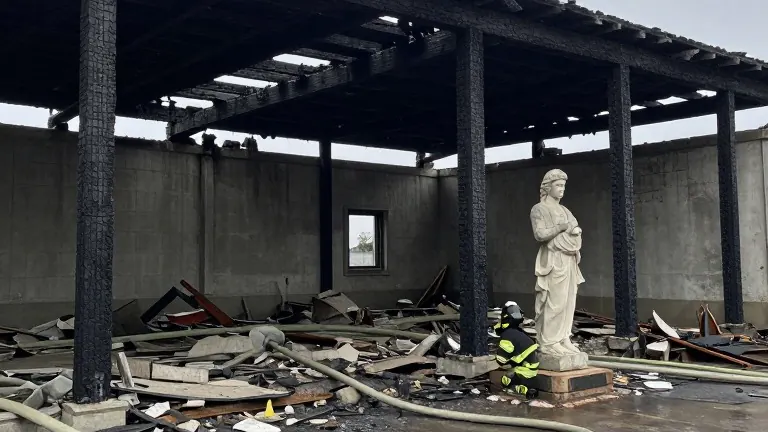
In the first days of the siege, Israeli troops launched a large-scale demolition of dozens of Palestinian buildings. Soldiers stormed the Ein Deir Bahha neighborhood at night, forcing families to flee without their belongings. Footage captured a 70-year-old shopkeeper, Hijazi Shawer, being beaten by soldiers. Tear gas canisters were also fired into Al-Ahli Hospital, causing panic among patients and staff. The Palestinian Prisoner's Society reported that at least 110 people, including three women and seven children, have been detained in the Hebron governorate since the raids started.
Settler violence has accompanied the military operation. On Wednesday, Israeli settlers assaulted three foreign journalists: Andrey Ilyich Khrzhanovskiy, Adele Shoko, and Jasper Nathaniel. Khrzhanovskiy, known as Andrey X, lost consciousness and was detained at a police station without medical care. In other incidents, settlers uprooted over 200 fruit trees and destroyed water wells and agricultural facilities east of the city. They also prevented farmers from harvesting olives. The Masafer Yatta region in the south has been isolated, cutting off 12 villages from urban centers and markets. This isolation has left dozens of patients unable to reach hospitals for daily care.
Hebron is a major economic hub for Palestinians, accounting for roughly 40 percent of the territory's industrial output and 30 percent of its exports. The disruption threatens livelihoods across the region. On Thursday, two Palestinians were injured and seven detained as settlers attacked residents and vehicles in the Ras al-Joura area near the city's northern entrance. Israeli forces also detained a young man and a woman in the al-Kassara area following a Monday raid, and a victim of a settler assault in the Khirbet Quwaweis area.
Palestinian officials and human rights groups have criticized the operation as a form of collective punishment. Al-Haq, a Palestinian rights organization, stated that the siege violates international law and constitutes a prohibited act of aggression. The Israeli NGO B'Tselem described the military action as having nothing to do with security. UN Human Rights Chief Volker Turk warned that threats to empty entire neighborhoods raise concerns of ethnic cleansing. Roland Friedrich, the director of UNRWA Affairs for the West Bank, noted that the current displacement echoes the mass exodus from the northern West Bank in early 2025, where over 34,000 refugees from Jenin, Tulkarem, and Nur Shams camps remain displaced more than a year later.
Muhammed Shehada of the Euro-Med Human Rights Monitor said the government is using collective punishment to deter Palestinian reaction to its policies. He argued that the goal is to advance de facto annexation by making life in the West Bank impossible. He described the tactic as a tool of terror intended to prevent resistance to the pace of displacement. Palestinian leaders have also accused the government of using the operation to secure votes from settlers before Israel's general election scheduled for Tuesday.
The lockdown is expected to continue as Israeli forces maintain the siege. No specific end date has been announced by the military. The next scheduled political event is the general election in Israel on Tuesday, which may influence the duration and intensity of the military presence in Hebron.