Democratic midterm victory prompts reassessment of global rate outlook
Democratic control of Congress could ease pressure for further interest rate increases in 2027, but analysts say energy prices, government spending and economic growth remain crucial.
By Luka Evans ·
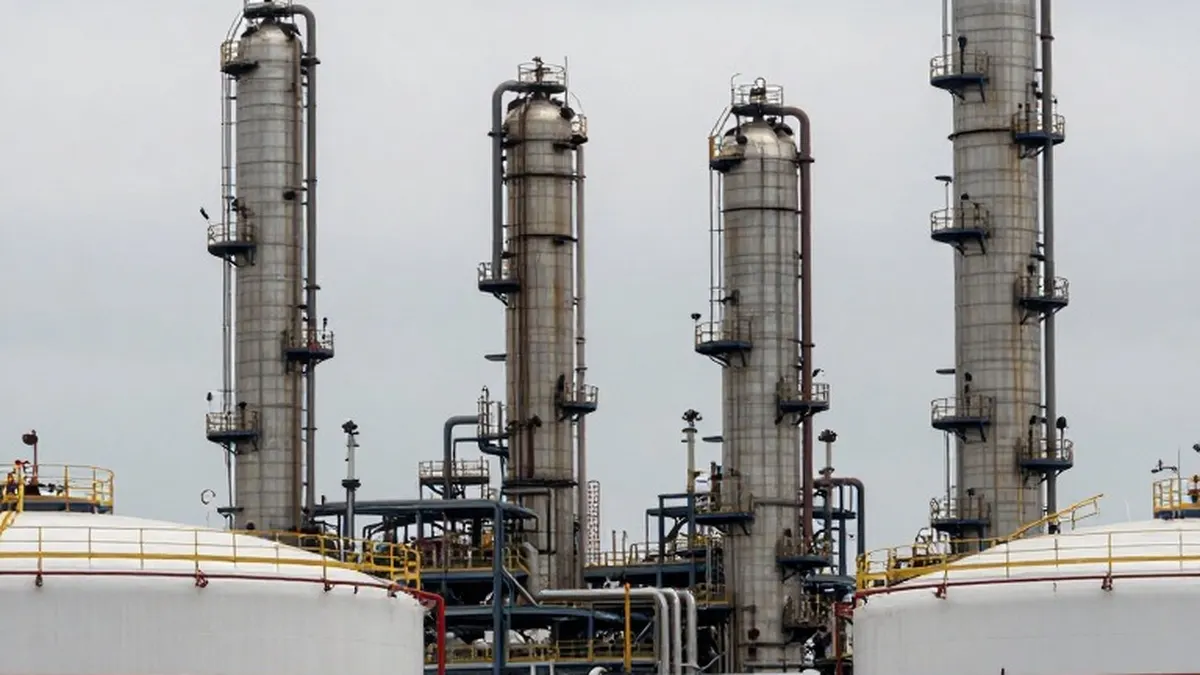
Democrats' decisive victory in the U.S. midterm elections has given investors grounds to reconsider the outlook for global interest rates next year. Market watchers say the outcome could help reduce pressure for further increases, although much depends on the Iran war, energy costs and the direction of U.S. fiscal policy.
The Federal Reserve, Bank of England, European Central Bank and Bank of Japan have all increased rates in recent months. Their tightening has partly reflected rising oil and gas prices linked to the U.S. and Israel's war with Iran. The conflict has also worsened constraints on global refining capacity, pushing up prices for diesel, gasoline and jet fuel.
Although traders had anticipated substantial Democratic gains, the party's capture of both congressional chambers removed uncertainty about its ability to challenge President Donald Trump's policies. Brent crude dropped 8.7% on Wednesday and finished below $100 a barrel for the first time since September. The decline largely reflected hopes that Trump would become more willing to negotiate an end to the war, allowing Gulf refining capacity and export conditions to improve.
Vice President JD Vance's statement blaming Republican losses on the conflict reinforced that interpretation. AJ Bell's head of markets, Dan Coatsworth, said investors viewed the Republican acknowledgment as a possible incentive to seek a swift resolution. Morgan Stanley's Andrew Slimmon said a settlement could lower oil prices and ease an inflation problem that has contributed to higher rates.
The market response remained cautious, however. Oil recovered some ground on Thursday and traded unevenly on Friday, underscoring uncertainty over an end to the nearly nine-month conflict. Thursday's money market pricing showed a slightly greater likelihood of easing over the following year than a week earlier. Over two years, CNBC's analysis of LSEG data showed ECB rate pricing down 8.7 basis points for the week, compared with 4.6 basis points for the Fed.
Political and energy obstacles could limit any relief. Chatham House's Laurel Rapp said Democrats would seek congressional votes to restrict the administration's Iran war powers, but questioned whether those measures would bind it. Eurasia Group's Clayton Allen expected an escalation within weeks. Bank of England Governor Andrew Bailey, speaking after Thursday's 25-basis-point increase, said a peace process would not resolve every source of pressure, including Strait of Hormuz obstructions, inadequate refining capacity and low European gas storage.
Economic resilience will also shape central banks' decisions. KBRA's Ken Egan said the key issue was whether underlying growth would allow inflation pressures to persist. Europe is approaching winter after months of expensive energy, with effects still spreading through the economy. Policymakers must assess whether those costs feed into broader wage and price increases or whether weaker demand contains them.
U.S. government spending presents another uncertainty. Rabobank's Jane Foley said greater fiscal restraint could reduce inflation, but Democrats' promises to ease living costs made the outlook difficult to judge. J.P. Morgan's James Sullivan said heavy spending during an expansion with low unemployment had contributed to inflation pressures alongside the war, tariffs and energy shortages. A change could give the Fed more flexibility.
Baird Strategas's Daniel Clifton also highlighted investment in U.S. data centers. He warned that tighter fiscal policy, rising rates and slower artificial intelligence investment could produce a policy mistake around mid-2027. His forecast nevertheless calls for a mid-cycle slowdown in 2027, rather than a U.S. recession.
More News · National news · Report a business · Got a Story?