Debut Feature Explores Grief Through Aliens and Dinosaurs in Tokyo
Saito Kisin’s film weaves four short stories together to depict the numbness and humor surrounding his father’s sudden death.
By Luka Evans ·
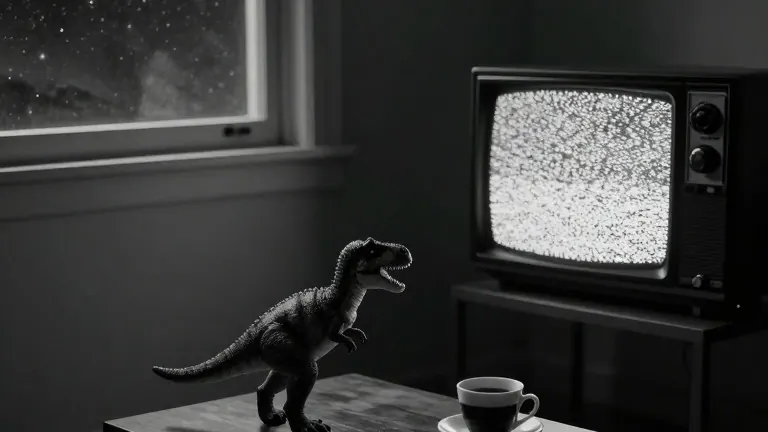
Saito Kisin’s debut feature, “Kefi,” offers a distinct perspective on mourning by abandoning traditional narrative structures. Instead of relying on conventional emotional cues, the film utilizes surreal imagery, including dinosaurs and extraterrestrials, to process the complex feelings surrounding the death of a distant father. The compact runtime allows the director to present a fragmented view of grief that emphasizes numbness and dry humor over traditional sorrow.
Kisin initially conceived the project as a collection of four independent short films, each with a specific thematic focus on ethics, hypocrisy, discrimination, and life and death. He intended to loosely base the characters on his own family, with the stories following three sisters. The personal stakes increased when Kisin learned of his father’s death in 2024, an event that mirrors the plot of the film’s opening sequence.
In the film, the sisters, named Kyo, Asumi, and Kino, receive news of their father’s passing. He had been separated from the family for approximately a decade following their parents’ divorce. Kisin explains that his own lack of immediate sadness stemmed from this long period of absence. He states, “To tell you the truth, when my father passed, I didn’t feel sad.”
The director uses the characters’ separate lives to illustrate that family members do not always share identical experiences or emotions. He notes that siblings often live apart but eventually converge on similar viewpoints regarding loss. One episode of the film brings the three sisters back together, allowing their individual journeys to intersect. This structure reflects Kisin’s belief that not everyone processes the loss of a loved one through visible grief.
Visually, the film shifts between vivid color and monochrome, as well as chaotic handheld shots and steady camerawork. Kisin did not assign these styles to specific themes but used them to test different approaches. He aims to keep the audience attentive by varying the visual texture throughout the narrative. The mixed techniques allow the imagery to carry different nuances without a rigid formalist structure.
Kisin served as director, writer, cinematographer, gaffer, and editor on the project. He credits this hands-on approach with allowing him to work with a small, trusted team. He uses a single-lens reflex camera and basic editing software, methods he developed for personal video projects. This workflow contrasts with larger productions where coordination can become a distraction, allowing Kisin to maintain a direct connection with his material.
The film is scheduled to play in the Nippon Cinema Now section of the Tokyo International Film Festival. Kisin hopes the project challenges international perceptions of Japanese cinema, which he feels are often limited to anime or classic auteurs. He wants to show that modern Japanese filmmakers offer diverse and unique perspectives that extend beyond well-known historical figures.