Cyclone Arnab Strikes Andhra Coast
The storm brought 135kph winds and 1.5-metre surges, forcing 180,000 evacuations across two states.
By Luka Evans ·
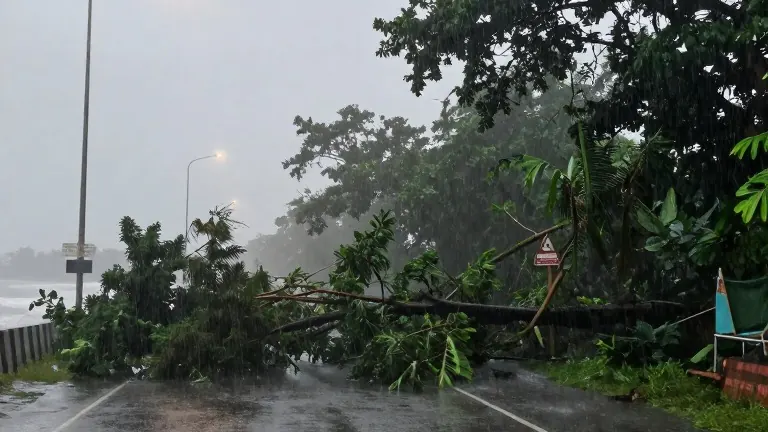
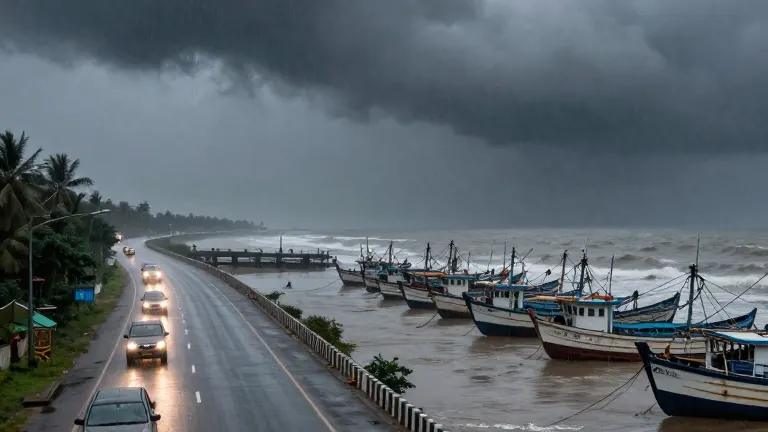
Cyclone Arnab made landfall along the Andhra Pradesh coast on the morning of Wednesday, October 28. The system produced winds reaching 135 kilometres per hour and heavy rainfall. At the moment of impact, officials had reported no casualties. The storm was classified as a very severe cyclonic storm, the third-highest category on the scale used by India's Meteorological Department. Its status was downgraded to severe as it moved inland.
Authorities evacuated at least 180,000 residents from Andhra Pradesh and Odisha on Tuesday. This action preceded the cyclone's arrival. More than 12 million people lived in the zone where the storm was expected to track. Transport networks suffered immediate disruption. Flight and train services were cancelled, and several schools closed their doors.
Flooding threatened structures in Kakinada district, which lay directly in the storm's path. A resident described the uncertainty as water levels rose. The resident stated, “No one knew whose house the water would rush into next or whose home would be submerged.” The Indian Meteorological Department forecast a storm surge of up to 1.5 metres above normal tide levels. Low-lying areas in Andhra Pradesh faced the highest risk of inundation.
Warnings extended to neighbouring regions due to the cyclone's peripheral effects. Nepal's authorities advised tourists on Tuesday to avoid high-altitude areas. Officials cited concerns over torrential rain, snowstorms, and avalanches. These conditions were expected from Thursday through Saturday. Nepal suspended the issuance of trekking permits for a three-day period. This halt occurred during the peak hiking season, when approximately 750 hikers typically receive permits daily. The country is still recovering from a glacial collapse in August that killed more than 1,400 people and left at least 5,000 missing.
Sri Lanka closed its schools in response to the weather system. The Department of Meteorology warned that Arnab could trigger flash floods and landslides in the island nation.