Tail piece found miles from crash
Investigators located left elevator fragments 3.8 miles from the Greenacres impact site, confirming the aircraft disassembled before hitting the ground.
By Takeshi Davidson ·
A fragment of the Learjet tail was discovered nearly four miles from the crash site in Florida, confirming the plane broke apart before impact.
National Transportation Safety Board member Tom Chapman announced on Tuesday that most of the left elevator, the tail component controlling pitch, was found in three separate pieces. The debris lay between 1.3 and 3.8 miles from the impact zone in Greenacres, near West Palm Beach, where the jet went down Sunday afternoon. Chapman stated that without an intact elevator, the pilot could not have pulled the aircraft out of its nosedive. He noted that while the loss of the part was a critical piece of evidence, investigators have not yet determined if it caused the loss of control or resulted from the forces acting on the plane.
The crash killed all nine people on board the Bahamas-bound Learjet 60. The victims included technology entrepreneur Adam Robinson, his wife Helen Sharp, and their two young children. Jeff Gregory, a 55-year-old crew member from the Philadelphia suburbs, was in the cockpit with co-pilot Nathalia Gadelha Filgueiras. Friends believe Gregory recited the Lord's Prayer during the final radio transmissions. Upper Jets, the operator, launched a fundraiser to support Gregory's family. Thomas Noetzel, the director of operations, described Gregory as a devoted and conscientious man who loved flying.
Aviation safety expert Jeff Guzzetti told The Associated Press that the debris pattern suggests the elevator parts broke off close to the ground. He explained that if the components had separated at altitude, they would have scattered much farther from the crash site. Guzzetti assessed that the broken pieces were likely a byproduct of the nosedive rather than the initial cause of the failure.
Filgueiras sent a text message to her boyfriend about 10 minutes before the crash reporting turbulence and ice. In the final two minutes of flight, her communication with air traffic control shifted from calm updates to urgent alerts. She reported ice accumulation and vertical movements of more than 700 feet. As the jet descended at a rate of over 20,000 feet per minute, she told controllers, "We're going to crash into the ground," followed by "We're out of time!" before the transmission ended.
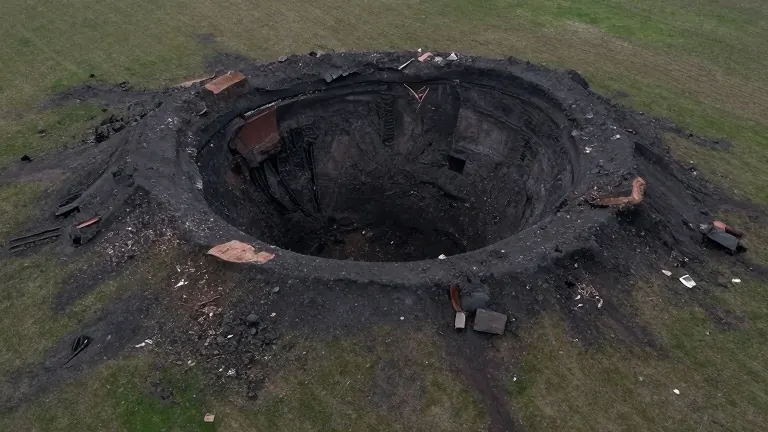
The aircraft struck the earth with enough force to create a crater before catching fire. Approximately 600 residents near the crash site remain displaced, though only one person on the ground was injured. Investigators have collected dashcam video and witness statements. Following days of heavy rain, the team plans to access the crater on Wednesday to locate critical components. Weather remains a primary focus of the investigation. The NTSB expects to release a preliminary report in about a month, with a probable cause determination likely taking more than a year.