Serbian Vote: Student List Claims Majority as Vucic Steps Aside
Record turnout ends the Serbian Progressive Party's decade-long dominance, with projections showing a decisive shift in Belgrade's political balance.
By Takeshi Davidson ·
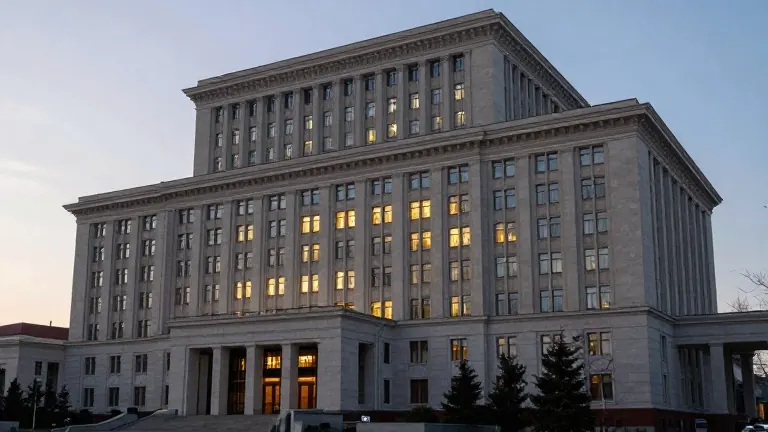
Serbians will wake Monday to a new governing majority after voters chose a student-led movement over the party that has controlled the state for over a decade. The shift follows a snap parliamentary vote held on Sunday, which drew the highest level of participation in more than 30 years. For citizens who spent nearly two years in the streets, the result represents a definitive break from the administration of President Aleksandar Vucic.
Vucic, who has shaped Serbian political life since the early 2010s, acknowledged the outcome to supporters. "It is clear that we have lost these elections," he said. Early vote sampling indicates his Serbian Progressive Party (SNS) list will secure 105 seats in the 250-member parliament. The Student List is projected to capture between 135 and 140 seats, granting it a clear mandate to form the next government.
The political movement that defeated the incumbents grew out of public grief and frustration. It began after a train station canopy collapsed in Novi Sad on November 1, 2024, killing 16 people. What started as mourning evolved into a sustained protest led by Ilija Srdanovic, a professor at the Faculty of Medicine in Novi Sad. The group, which included doctors, professors, and workers, pledged to depoliticize public institutions and combat corruption. Vucic had dismissed the demonstrators as "blockaders" attempting to destabilize the country.
The election marks the end of a long tenure for Vucic, who was born in Belgrade in 1970. He entered politics in 1993 with the ultranationalist Serbian Radical Party, where he later served as first deputy prime minister from 2012 to 2014. After becoming prime minister and then president in 2017, he won re-election in 2022 with a term scheduled to last until 2027. Under pressure from the ongoing protests, he resigned in September 2026 to call for early elections, though he retained influence over his party's strategy.
The economic record left by the previous administration remains a central point of debate. Official data cited by Reuters indicates that unemployment fell from 26 percent to between 8 and 9 percent during Vucic's time in power. Nominal GDP nearly tripled to approximately 90 billion euros. Annual foreign direct investment rose from roughly 800 million euros in 2012 to a record 5.2 billion euros in 2024. A network of modern motorways was also constructed during this period. However, critics note that rising wages did not always translate into higher living standards, and public debt remains a key concern.
Political scientist Dusko Radosavljevic described the victory as a response to long-standing grievances. He stated that the students "simply gave a voice to the justified anger of citizens." Radosavljevic characterized the past decade as one of "systematic pressure and the destruction of social institutions." He noted that intelligence services frequently monitored political opponents, while critical analysis was increasingly absent from public media.
The new parliamentary composition will test the Student List's ability to transition from protest platform to governing body. The list must now navigate the complexities of state administration, including managing the economy and diplomatic relations. The outcome signals a potential realignment in Serbian politics, moving away from the dominant influence the SNS held since it took power in 2012.
Vucic’s departure from the presidency follows a period where he maintained control over the state apparatus despite public criticism. Journalist Safeta Bisevac noted that while the SNS initially promised to fight corruption and organized crime, the results were modest. Bisevac added that authorities widened their grip on institutions and media during the period. The new government will now have the opportunity to address these structural issues with a clear mandate from the voters.
Source: Al Jazeera