Michigan voters face historic races in Tuesday's midterms
Polls open at 7 a.m. for a ballot that includes a governor's race, a U.S. Senate contest, and two constitutional proposals.
By Luca Harrison ·
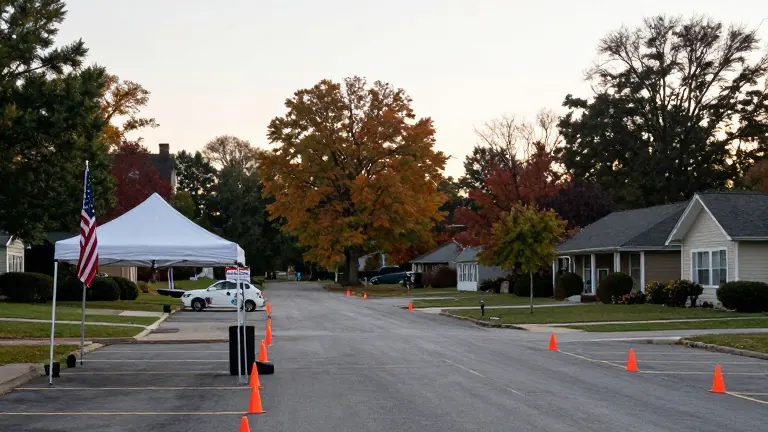
Michigan residents will cast ballots on Tuesday, Nov. 3, in a general election that determines the state's next governor and one U.S. Senate seat. Polls open at 7 a.m. and close at 8 p.m. Voters in line when the polls close are permitted to cast their ballots. The election concludes a cycle that includes contests for the Secretary of State, Attorney General, and two constitutional proposals.
The governor's race pits Jocelyn Benson, the current Secretary of State, against John James, the U.S. House Representative for Michigan's 10th District. Incumbent Governor Gretchen Whitmer is term-limited and not running. Benson is running with Michigan State Senator Winnie Brinks. If they win, they would be the first all-female ticket to hold the top two executive offices in the state. James is running with State Representative Jay DeBoyer. A victory for James would make him the first African American governor of Michigan.
One U.S. Senate seat is open because Democrat Gary Peters is retiring. Abdul El-Sayed, a former health department director, faces Republican Mike Rogers, a 14-year U.S. House veteran. El-Sayed is the first Muslim candidate to secure a major party nomination for U.S. Senate in American history. Rogers won endorsement from Democrat Haley Stevens this week. A win for Rogers would mark the first Republican Senate victory from Michigan since 1994.
Voters in Wayne, Oakland, and Macomb counties will decide whether to renew a 0.1 mill tax for the Detroit Zoo. The renewal would collect approximately $8.8 million in the first year to support 2,000 animals at the 125-acre facility. Voters in Oakland and Wayne counties also vote on a 0.2 mill tax for the Detroit Historical Society and the Charles H. Wright Museum of African American History. Supporters estimate this tax adds about $30 annually for a home with a taxable value of $300,000.
Two proposals appear on the ballot statewide. Proposal 1 asks if Michigan should hold a convention to draft a new constitution. Proposal 2 asks if the state should prohibit regulated utility companies and government contractors from making political contributions.
Unregistered voters can sign up on Election Day at their local clerk's office. They must provide proof of residency. Voters with a photo ID must present it at the polls. Those without one may sign an affidavit to receive a ballot. Absentee ballots must be received by the local clerk's office by 8 p.m. on Tuesday. The Detroit Zoo millage and museum millage questions are specific to the metro area districts.
The Michigan Secretary of State's office manages the election. Voters can check their registration status at Michigan.gov/Vote. The state uses a system that allows straight party tickets, split tickets, or mixed tickets. These choices apply only to the partisan section of the ballot. Nonpartisan races and proposals are voted on individually.