Geneva History: The Fabyan Estate and Its Role in Ending WWI
Beyond the local landmarks, the early 20th-century home of George and Nelle Fabyan hosted a private codebreaking operation that preceded the U.S. military's official signal intelligence efforts.
By Takeshi Davidson ·
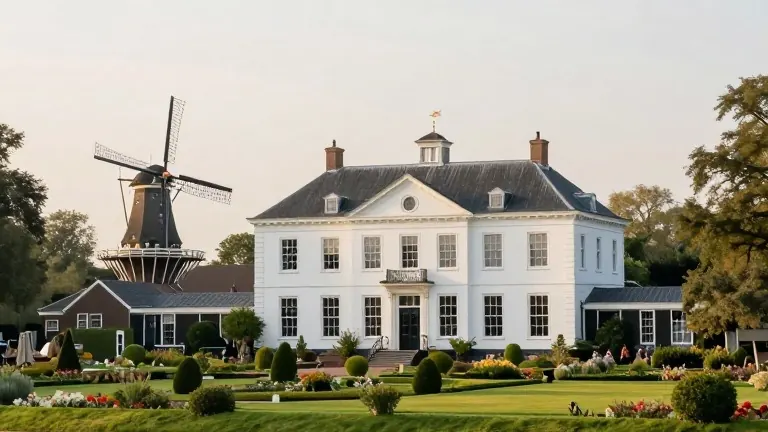
The Geneva compound owned by George and Nelle Fabyan in the early 20th century housed a private cryptanalysis team that worked on German codes during World War I. This effort, conducted at the Fabyans' own expense, predates the establishment of official federal codebreaking agencies and contributed to the Allied victory. Today, the site is known primarily for its physical landmarks, including Fabyan Parkway, the forest preserve, and the villa museum.
George Fabyan, a Chicago industrialist known as Colonel Fabyan, and his wife Nelle moved to the Fox River in Geneva in 1905. They acquired 300 acres and hired architect Frank Lloyd Wright to renovate the villa. Preservation Partners of the Fox Valley, which operates the current museum, describes the property as a lavish showplace. It featured fountains, gardens, a Roman-style swimming pool, a Dutch-style windmill, a private zoo, a working lighthouse, a boathouse, greenhouses, tennis courts, and laboratories.
The Fabyans used their estate for purposes beyond display. George Fabyan inspired a community of thinkers who advanced science in acoustics, cryptography, genetics, and physiology. Richard Munson, author of a book on Fabyan, notes that the tycoon considered himself an ideas man. Munson writes that Fabyan created perhaps the first independent research center and laid the foundation for the National Security Agency. He also helped end World War I by breaking German codes.
A 1993 history of signal intelligence published by the U.S. Army's Center for Military History states that no federal agency was conducting cryptanalytics before 1917. However, starting in June 1916, George Fabyan organized a group of trained cryptanalysts at his Riverbank Laboratories in Geneva. This team worked on codes and ciphers forwarded by the War, Navy, State, and Justice Departments. The work at the Geneva compound ceased in 1919 after the war ended.
This private effort served as an antecedent to the official signal-breaking work in the intelligence sector. That later work played a role in the Allied victory in World War II. Fabyan's interests extended to other unusual areas, including attempts to prove that William Shakespeare did not write the plays attributed to him. His acoustics research led to the creation of the Riverbank Acoustical Laboratories, which continues to operate adjacent to the forest preserve.
Nelle Fabyan, who married George in 1891, had a distinct focus on animals and horticulture. She maintained kennels for prize-winning dogs and grew flowers in greenhouses. She sold these flowers to hotels and restaurants in Chicago. At a September event honoring her, Terry Emma, executive director of the Geneva History Museum, shared findings from a 1920 magazine interview. Preservation Partners of the Fox Valley states that this interview reveals four aspects of Nelle's life: socialite, farmer, sculptor, and philanthropist.
The couple died in Geneva, with George passing in 1936 and Nelle three years later. Their legacy persists through the physical structures and the scientific history associated with the Riverbank Laboratories. The site remains a focal point for understanding the local history of cryptography and architectural design in the Fox Valley region.