Cúcuta remains under military control as border violence escalates
Special forces guard the streets of Colombia's northeastern capital after two attacks in one week left a former official dead and four police officers injured.
By Luka Evans ·
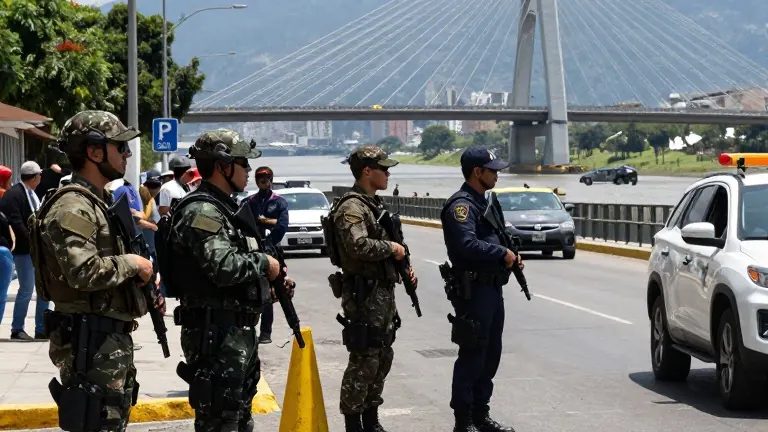
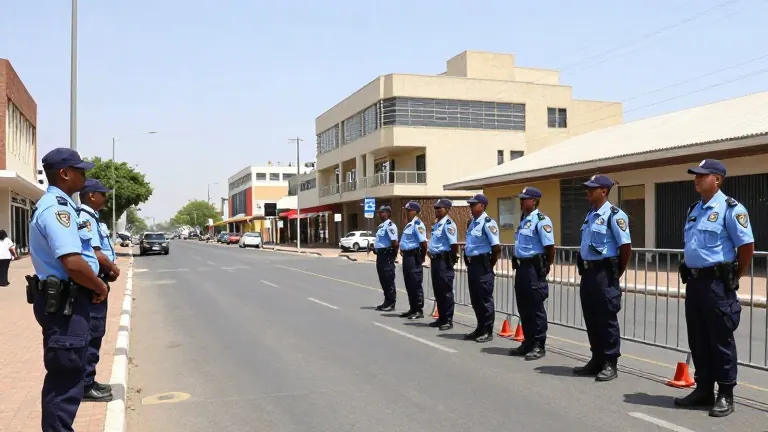
Soldiers from urban special forces units stand at traffic checkpoints in Cúcuta, Colombia, carrying long guns alongside local police. The city has remained under a state of military occupation since Friday, following an order from President Abelardo De la Espriella to secure the border region with Venezuela. The deployment includes aerial surveillance by the Air Force, according to Army Commander Major General José Soto Sánchez, who detailed the operations on social media.
The military presence is expected to expand in the coming days. The city government announced that 324 additional military personnel and 150 police officers will be added to the existing security detail. This reinforcement aims to stabilize public order in a city that has experienced a sharp rise in violent incidents.
The decision to militarize the city was made after two major attacks this week. On Monday, Miguel Castellanos, the former government secretary for Cúcuta, was shot and killed at a gas station. Authorities are still investigating the motive and identifying the suspects behind the shooting. Just one day later, an explosive device detonated near the international bridge connecting Cúcuta to Ureña, Venezuela. The blast injured at least four police officers.
Officials suspect the guerrilla group known as the National Liberation Army (ELN) carried out the explosion. The ELN is considered the last active guerrilla force in Colombia, though the group has not officially claimed responsibility for the attack. The city sits on a porous border with Venezuela, a route frequently used by criminal organizations to transport contraband, drugs, and migrants.
Cúcuta borders the Catatumbo region, a zone of constant armed conflict. Since January 2025, the ELN has clashed with a faction of FARC dissidents that rejected the 2016 peace process. The fight for control over coca crop territories has resulted in more than 100 deaths and the displacement of over 56,000 people. This represents the largest single event of displacement in the country in recent years.
Gerson Arias, an analyst at the Ideas for the Peace Foundation, noted that the conflict dynamics from Catatumbo have recently shifted into Cúcuta. He explained that both illegal armed groups use about 20 local criminal bands to attack one another, a tactic he described as criminal outsourcing. This strategy allows the guerrillas to engage in combat while maintaining a low profile.
Cúcuta Mayor Jorge Enrique Acevedo asked on Friday for Venezuela to join the Americas Shield, a U.S.-led alliance focused on combating drug trafficking. He argued that including the neighboring country would strengthen cooperation and prevent criminal structures from finding refuge across the border. President De la Espriella cited the need to guarantee security and sovereignty in the border city but did not mention specific coordination efforts with Venezuela.
Arias observed that after the United States deposed and captured Venezuelan President Nicolás Maduro in January, officials expected stricter controls on the border. However, those controls did not materialize. The analyst said criminal bands operating on both sides of the river seized the opportunity to maintain their illegal businesses.