9,700 Pounds of Lead Azide: Army Moves Iowa Blast to Monday
Illinois officials demand a delay after raising concerns about toxic dust crossing the state line.
By Luka Evans ·
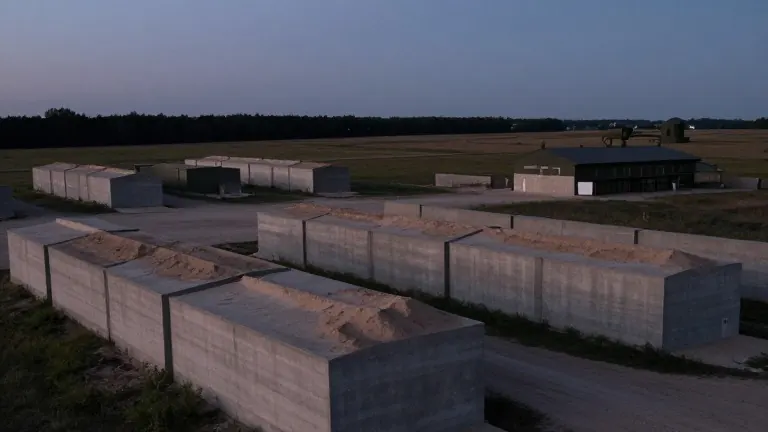
The U.S. Army has rescheduled the detonation of 9,700 pounds of lead azide from Friday to Monday. The explosive material is stored in 68 drums at a military ammunition plant in Middletown, Iowa. The site sits less than half an hour from the Illinois border. The delay follows a public letter signed by Illinois Gov. JB Pritzker and several congressional members on Thursday night.
The officials cited grave concerns about the potential for toxic lead exposure. The Army originally planned to detonate the unstable chemicals at noon Friday. The agency stated that the drums had degraded over time and posed a risk of spontaneous explosion. Federal regulators approved the blast last week after determining it was the safest method to remove the material from the site.
Acting Secretary of the Army Adam Telle announced the change in a social media post. He explained that the postponement buys time until the latest possible moment before a forecasted temperature drop. A drop in temperature could further destabilize the chemicals. Telle said the move allows for a final review before the detonation proceeds.
Iowa Gov. Kim Reynolds also called for the delay. Her office confirmed she spoke directly with Telle. Environmental groups filed a lawsuit seeking emergency court action to halt the detonation. The legal challenge added pressure on the Army to pause its timeline. The state of Illinois joined these efforts to ensure the public receives more information before the blast occurs.
Illinois health officials warned that lead particles could travel through the air. The Illinois Department of Public Health stated that current Army models show the detonation could impact Mercer County. The department noted that officials had not been briefed on the full plan to monitor lead levels. Pritzker’s letter demanded that the Army share this monitoring data before proceeding.
Sen. Tammy Duckworth, a combat veteran, wrote that the blast could send a toxic dust cloud over western Illinois. She called for a delay until more information is public. Rep. Darin LaHood, a Republican, said families deserve transparent safety plans. He urged the Army to seek safer alternatives to the planned detonation.
The Army said it will detonate the drums inside earth-covered concrete magazines. These structures will be surrounded by sand barriers about two stories high. Before and during the blast, the soil above the magazines will be saturated with water. The Army stated that lead levels are expected to remain well below the threshold that requires additional EPA action.
The agency will update its exposure models six hours before the detonation and hourly afterward. Two maps showing possible exposure areas are already available online. The Army will post updated maps on its website. The Illinois EPA will monitor its northern air network for any signs of impact. State health officials recommend that residents stay indoors with windows closed for 24 to 48 hours after the event.
Iowa State University Extension advised cattle producers near Burlington to watch for signs of lead exposure in livestock. Farmers are urged to keep animals inside when possible. The extension hopes weekend rain will wash lead from grass leaves. Farmers should remove cattle from pond drinking areas, which may be safer a few days after the detonation.
The detonation is now set for Monday. The Army will collect air and soil samples to assess exposure risks. The agency will share updates on its website. The process is designed to minimize airborne lead dust while destroying the degraded chemicals.