PIF Tower Hit Again in Riyadh as Houthi Attacks Intensify
Riyadh's PIF Tower was struck for the second time in five days, while Saudi warplanes killed up to 25 people in Yemen in a related series of strikes.
By Luka Evans ·
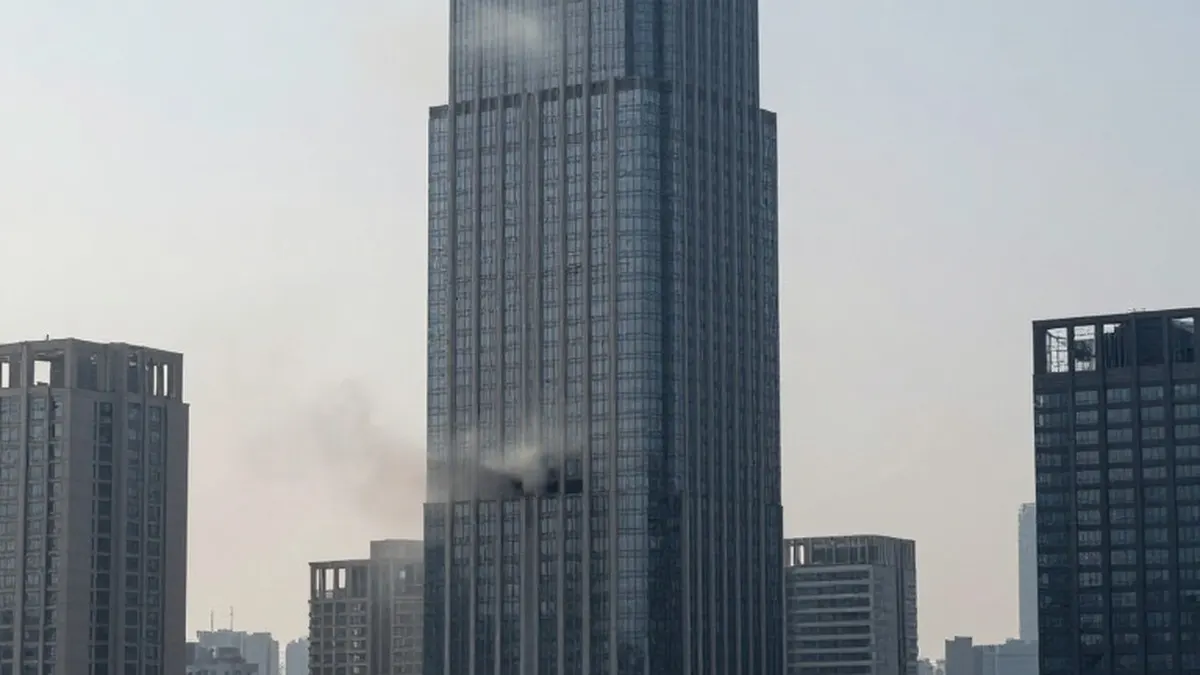
Riyadh’s prominent Public Investment Fund Tower has sustained damage from a suspected aerial attack, marking the second time in less than a week that the landmark building has been targeted. The strike occurred on Tuesday and was attributed by Saudi authorities to Houthi-aligned forces in Yemen.
The Saudi Civil Defence agency reported that eleven people were injured in the incident. Officials described the event as a "cowardly terrorist attack" and released images showing the impact on the structure, which houses the headquarters of the kingdom’s sovereign wealth fund.
The PIF Tower is among the tallest buildings in the Saudi capital and stands within the King Abdullah Financial District. It had previously sustained damage in an attack last Thursday, highlighting a pattern of strikes on high-profile infrastructure in the city.
This latest incident underscores the Houthi group’s demonstrated capability to strike prominent targets deep within Saudi Arabia. This offensive capability persists even as Riyadh conducts its own air strikes on territory in Yemen.
The attacks on Riyadh follow a series of significant strikes earlier this year. In early November, a building belonging to the national oil company Aramco was damaged in the capital. Prior to that, an attack on Riyadh’s airport in October resulted in the deaths of at least fourteen people.
The Tuesday strike in Saudi Arabia coincided with intensified military activity in Yemen. Saudi warplanes targeted buses and trucks in the Wadi Maabaq area of Lahij governorate. According to the Saba news agency, the strikes killed as many as twenty-five people and wounded six others.
Local residents reported that badly burnt human remains were trapped inside one of the two buses that were hit, which complicated the process of identifying the victims. Witnesses stated that Saudi aircraft continued to circle overhead, preventing ambulance crews and residents from accessing the site and worsening the toll on those caught in the strikes.
The renewed fighting in Yemen began in July after a period of uneasy ceasefire. Since the resumption of hostilities, Houthi forces have made significant territorial gains, including securing control over Yemen’s southern coastline and the Bab al-Mandab waterway, which connects the Gulf of Aden to the Red Sea.
Control of this strategic waterway allows the Houthi-led government in Sanaa to influence shipping traffic heading to the Suez Canal in Egypt. The broader conflict, which originated with a Houthi offensive in 2014, has claimed nearly four hundred thousand lives according to various estimates, with many civilian deaths attributed to coalition bombardment and economic sieges.