Ray Panthaki's 'In Starland' Premieres in Estonia After Seven-Year Financing Battle
The directorial debut, produced by Christine Vachon and Pamela Koffler, world-premieres at the Tallinn Black Nights Film Festival.
By Luka Evans ·
Ray Panthaki’s feature film, In Starland, will have its world premiere at the Tallinn Black Nights Film Festival in Estonia. The British actor, known for his roles in Boiling Point and Marcella, spent seven years developing the project before securing the production.
The film is produced by Panthaki’s London-based Le Bateau Lavoir, Archface Films, and Killer Films. The latter company is headed by Christine Vachon and Pamela Koffler, who recently received Honorary Oscars. Variety reported in October that Killer Films had joined the production.
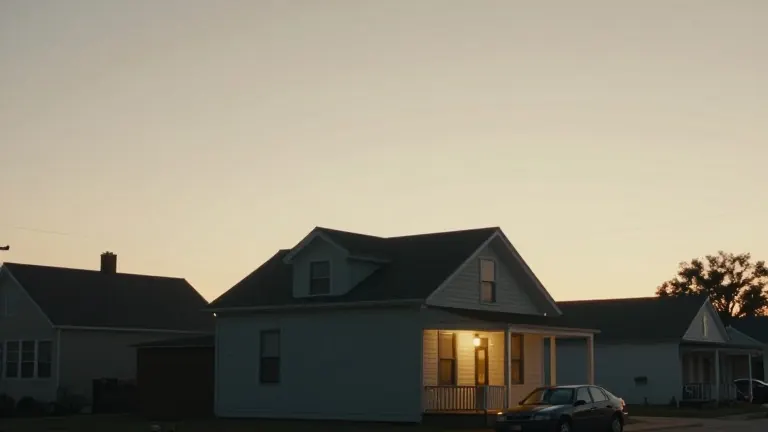
Panthaki describes the movie as a coming-of-middle-age story. The plot centers on Ernie, played by Clarence Maclin, a man living a quiet life in a small American town. His routine is disrupted when a group of young influencers forces him out of his shell. Panthaki says the characters are united by loneliness, a theme he calls one of the great contradictions of modern times.
The director notes that the film explores the idea that it is never too late to become who one is supposed to be. He explains that he wanted to examine what happens when someone reaches their forties without feeling they have truly lived. Panthaki states that the story is personal, drawing on his own experience as a young carer who felt behind society’s timeline.
Casting for the role of Ernie was a deliberate choice to avoid industry metrics. Panthaki says he rejected the idea of casting influencers with large follower counts, a strategy he briefly considered to appease financiers. Instead, he selected Maclin for his ability to convey a lifetime of experience without speaking much. The director says he was looking for a truth that would be difficult to manufacture, and he found it in Maclin’s screen test.
Panthaki acknowledges that the production was not easy to secure. He calls the process the hardest thing he has ever done, noting that there was no public funding or institutional support behind the project. He prefers the term non-dependent over indie, a label he says Ted Hope has written about. Panthaki says the film’s existence is a result of many unexpected events that strengthened his belief in the story.
The soundtrack plays a central role in the film, featuring 1980s hits that Panthaki wrote into the script. He says he wanted the audience to feel the power of nostalgia, particularly through the character of Ernie. The director personally wrote to musicians to secure the rights to songs such as Everybody Wants to Rule the World. He says the team had no business trying to afford those tracks on their budget, but the artists agreed to help.
Panthaki says he told the cast on the first day of rehearsals that they were making the film for every no they had ever received as artists. He notes that the team spent years trying to finance the movie, often being told they could not shoot in America on their budget or in the desired timeframe. The director says there is very little in the film that the team did not have to fight for in some way.