NCAA Drops Mandatory Handshake Protocol for Women's Basketball Coaches
Following a high-profile dispute during the 2026 Final Four, the Division I committee has made pregame handshakes optional and implemented several other procedural changes for the women's tournament.
By Takeshi Davidson ·
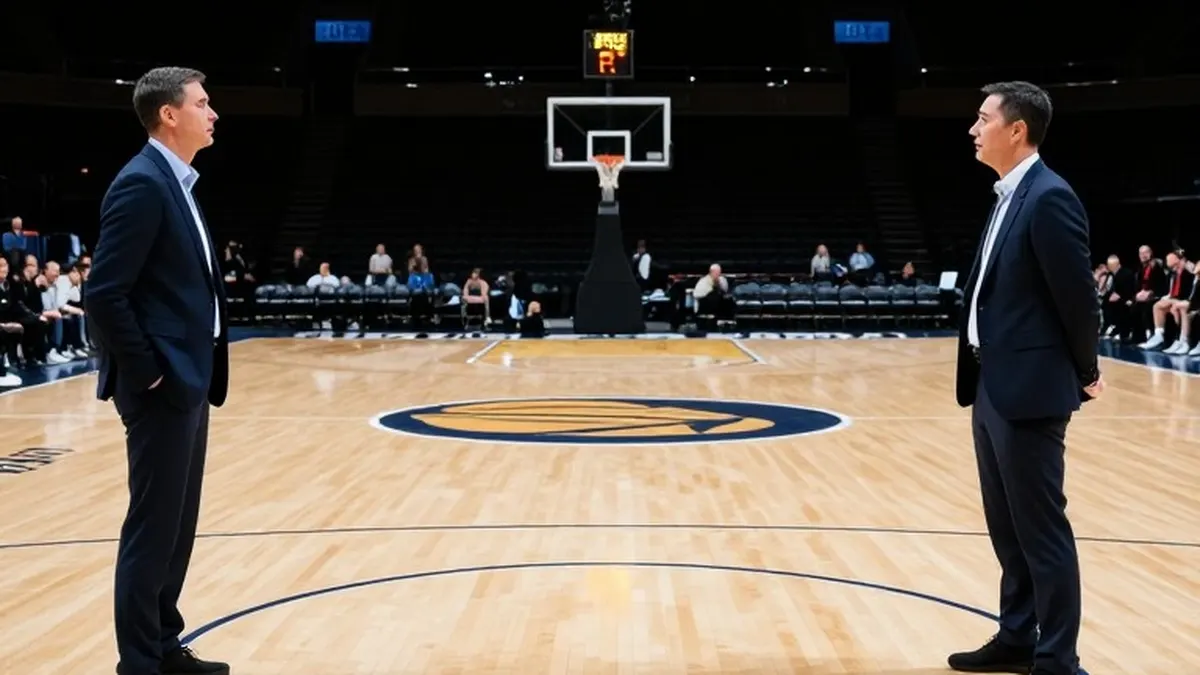
The National Collegiate Athletic Association has officially removed the requirement for mandatory pregame handshakes between coaches during its women's basketball tournament. A memo sent on Friday by the Division I women's basketball committee to administrators across all Division I programs outlines the new protocol. While the committee still encourages coaches to engage in informal handshakes before team introductions, the gesture is no longer a required part of the pregame procedure.
This policy update follows a widely publicized incident involving UConn head coach Geno Auriemma and South Carolina coach Dawn Staley. The two met in the national semifinal of the 2026 tournament in April, a game that South Carolina won 62-48. Shortly before the final horn, Auriemma approached Staley for what was assumed to be a postgame greeting. However, the exchange turned heated, and Auriemma was physically held back by his staff before he left the court without shaking hands with the opposing coach or players.
In the aftermath, Auriemma explained that he felt disrespected because he had waited for approximately three minutes for the pregame handshake to occur. He later apologized to Staley and her staff, admitting that he had lost his composure. Staley responded by expressing her high regard for Auriemma, noting that a single moment should not define an entire career. When asked about the new rules, Auriemma told The New York Times that he would simply follow the regulations, stating, "Everybody is there to win a game, man. That is the bottom line."
The memo also announced additional changes to the tournament structure. The women's tournament will no longer mandate open locker rooms for media members or require press conferences between the Sweet 16 and Elite Eight rounds at the regional sites. These activities will now be left to the discretion of the participating schools. Furthermore, pregame interviews with coaches will be eliminated from the standard schedule.
These adjustments appear to be a response to complaints regarding the unique scheduling challenges of the women's bracket. The tournament utilizes two regional sites with eight teams in each region, a structure that differs from the men's four-site model. This format has led to inconvenient timetables for teams. Auriemma highlighted the difficulty by noting that UConn had to arrive at the arena for a shootaround at approximately 6 a.m. on March 27 before playing North Carolina at 4 p.m. He questioned whether decision makers consulted coaches and players to ensure the schedule was normal.
Staley acknowledged the benefits of the two-region system but pointed out the drawback of not having a reasonable time for shooting practice. In a subsequent social media post, David Worlock clarified that the elimination of open locker rooms and mandatory press conferences applies only to the women's tournament. He also noted that game transcripts will not be eliminated but will be produced using a slower method, which is currently being tested at the volleyball championship.
Two smaller but significant rule changes were also included in the memo. Game clocks will now display tenths of a second throughout the entire tournament, a requirement that previously applied only to regional games and the Final Four. Additionally, player availability reports will now use five specific designations: available, probable, questionable, doubtful, and out. On the day of the game, the report will narrow these down to three categories: available, game-time decision, and out.
More News · National news · Report a business · Got a Story?