Heritage Minister Sparks Controversy with Remarks on Arab Lawmakers
Far-right minister Amichay Eliyahu drew sharp criticism after describing Arab lawmakers as barbarians and camel-riders during a Knesset session on social violence.
By Luka Evans ·
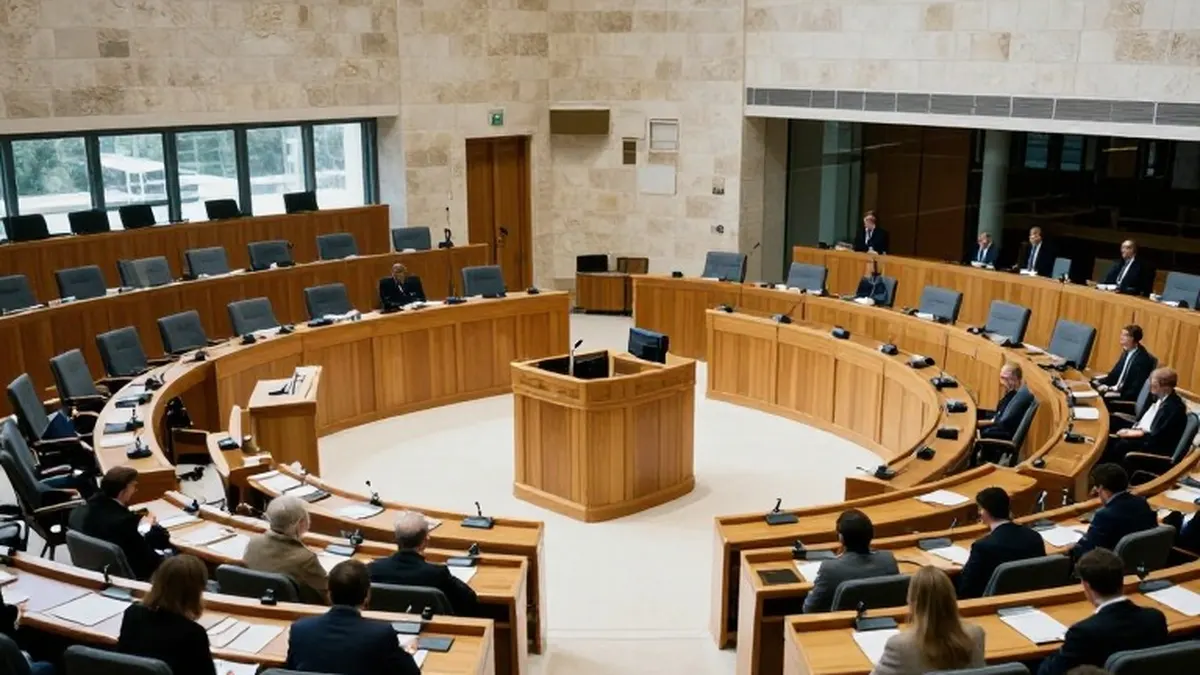
Tensions escalated in the Israeli parliament on Monday night when Heritage Minister Amichay Eliyahu used provocative language to address Arab lawmakers. Speaking during a debate focused on violence within Arab society, Eliyahu referred to the Arab members as barbarians and ignorant camel-riders. His comments, delivered in the plenum, appeared to be directed specifically at the Arab legislators present in the chamber.
Eliyahu, a member of the far-right Otzma Yehudit party, invoked the example of Steve Jobs to make his point. He noted that Jobs was adopted by an American couple but had a Syrian biological father. The minister argued that instead of growing up in what he called a barbaric state, Jobs founded Apple because success is determined by education rather than race or genetics. He urged the Arab lawmakers to seek education not only in Israel but globally, claiming that they had destroyed the Twin Towers and are currently destroying Europe.
The minister issued a warning that if the situation did not change, the children of the Arab community would die because of their own actions rather than those of the government. He accused them of killing over family honor and acting like savages. When interrupted by Arab lawmakers who shouted that he was being racist, Eliyahu told them to go and learn something. He further suggested that Arabs should study the Torah and learn the ways of Judaism and the Western world.
In his remarks, Eliyahu also addressed historical conflicts, stating that every time Arabs started wars or attacked Israel, the state retaliated tenfold. He predicted that this pattern would continue in the future. The minister is an observant Jew and the grandson of the former Sephardic chief rabbi of Israel, Mordechai Eliyahu. He has a history of making inflammatory statements that often generate significant public debate.
One of his most notable past remarks occurred in November 2023 when he claimed that dropping a nuclear bomb on the Gaza Strip was an option. Prime Minister Benjamin Netanyahu later described that statement as detached from reality. The comment was subsequently cited by South Africa in a motion accusing Israel of genocide before the International Court of Justice. Eliyahu responded to the international attention by boasting that even in The Hague, people knew his position.
The minister has also repeatedly called for the occupation, annexation, and resettlement of the Gaza Strip. He has stated that Israel was pushing to wipe out Gaza and make it Jewish, and suggested that the country should starve Gazans while bombing humanitarian aid. His actions have included breaking into an IDF detention facility to protest the prosecution of troops accused of abusing a Palestinian prisoner. He has also shared social media posts advocating for the reoccupation of Egypt’s Sinai Peninsula and blamed deadly terror attacks abroad on left-wing Israeli politicians.
This is not the first time a minister in Prime Minister Netanyahu’s outgoing government has used the term camel-riders. Finance Minister Bezalel Smotrich made similar comments regarding Saudi Arabia during a discussion about a potential normalization agreement. Smotrich said that if Saudi Arabia demanded a Palestinian state for normalization, Israel should tell them to keep riding camels in the desert. He was forced to apologize after the remarks sparked a backlash.
Following last month’s election, where Arab-led parties won a record 19 seats, several coalition lawmakers have frequently labeled Arab parties and lawmakers as terror supporters. On Tuesday, Knesset legal adviser Sagit Afik ruled that the term is not prohibited as a one-off statement directed at fellow lawmakers. However, she noted that systematically repeating the term alongside other insults constitutes prohibited humiliation and denigration.
Afik distinguished the term terror supporter from terrorist and militant, which the Knesset Ethics Committee has ruled are prohibited when used against fellow members. Watchdogs have noted an uptick in anti-Arab sentiment in Israeli media, leading some Arab lawmakers and community leaders to voice concerns about potential violence against the community.
The heated rhetoric in the Knesset adds to the political climate in Israel as the outgoing government prepares for the next phase of governance. The controversy highlights the ongoing tensions between coalition members and opposition lawmakers, particularly regarding the role and treatment of Arab representatives in the legislative process.